

















EU Observer (30 July 2018)
Following another series of rallies throughout the country, the Brussels media, policy-makers (those not on holiday) and NGOs continue their outrage over Poland's ruling party's seizure of the courts.
New bills tighten Law and Justice's grip on the Supreme Court and the judiciary, further abolishing the rule of law and weakening democracy.
Read and decide
But while Twitter and EU bubble publications are flooded with photos of protesting crowds and "chains of light" in front of the presidential palace, the Law and Justice-controlled senate has adopted a law restructuring the electoral code for next year's European elections.
The changes, described by PiS lawmakers as "simplifying the code and eliminating differences between regions", have been panned by experts as severely damaging the proportionality principle and raising - quite extremely - the electoral threshold, both going against EU law.
As the senate's legislative office has pointed out in its expertise, the effective threshold will now be, depending on the constituency, anywhere between 16 percent and 20 percent. That's more than three times over EU's maximum 5 percent, and over a 10-fold increase from the 1.5 percent in 2014.
What it means in practice is that no party other than the ruling Law and Justice and perhaps the opposition Civic Platform (PO) has any chances of winning even a single mandate, as - according to most recent polls - the third most popular party wouldn't win even 10 percent of the vote nationwide.
For Polish citizens it simply means that millions of their votes will be discarded, as the two major parties, having received 20-30 percent of the vote, can win 50 or more percent of the seats - directly opposing the EU's proportionality principle.
To be clear, an effective threshold over 5 percent isn't unheard of in the EU (in fact, Ireland has 17.5 percent) while some smaller member states can have around 11 percent.
But each of these cases has its reasons.
For states with 13 mandates or less this is actually the norm. In the Irish case, the high threshold is due to their single transferable vote (STV) system, which actually increases proportionality.
Belgium has a 9.8 percent threshold with 21 mandates to accommodate the three linguistic regions. The only major exception, contradicting European standards, is France, which is in the process of amending its code to abide by EU law and dropping the threshold to only one percent.
Pushed through parliament
This new law (or, technically, amendment) was pushed through parliament swiftly and quietly, being overshadowed by more flashy, rule of law-violating legislation, as seems to be the modus operandi for Kaczynski and other authoritarian-wannabes around the world, Trump included.
The draft law appeared on the parliament's agenda on 21 June and was passed on 20 July, without consultation and with PiS refusing a public hearing demanded by the opposition Modern (Nowoczesna) party. After passing through Senate, the only step left is a signature from President Duda - nicknamed "the pen" by opposition protesters.
The Senate Legislative Office offers a simple solution to the law - replacing the 13 new constituencies with a total of three, resulting in an effective threshold of just 4.2 percent.
But it is doubtful that any Law and Justice lawmaker even read that opinion, let alone considered implementing it.
Just as it was the case with every single opinion of the parliament's legislative offices, each exposing yet another step Kaczynski is taking towards an authoritarian regime.
Because why would they care? Citizens don't, as European elections are still far away in their minds and there are far greater threats to democracy right here, right now.
The media don't care either, as there are no photo-worthy streets flooded with protesters to put on the front page. The only ones who could care, the Brussels elites who will have to deal with a flood of Kaczynski's cronies next year, are on holiday, and when they come back this topic will be far too low on their agenda.
Who does that leave then to show outrage? You, the reader, you, the EU citizen, and you, the "EU bubble" who should remind our officials that if they just let it go, they let the illiberal clique tear yet another piece off EU's democracy.
Martin Mycielski is Brussels correspondent for leading Polish daily Gazeta Wyborcza
No comments yet.
- IRAN INVITES AZERBAIJAN TO JOIN NEW RAILWAY The Caucasus and Turkish-Armenian Relations 31.07.2018
- AZERBAIJAN RAISES MILITARY VIGILANCE IN RESPONSE TO ARMENIA’S UNCLEAR KARABAKH POLICY The Caucasus and Turkish-Armenian Relations 31.07.2018
-
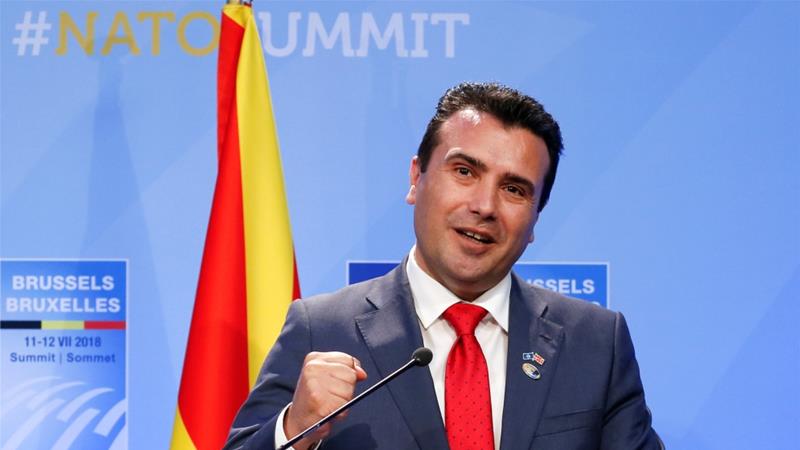 MACEDONIA TO HOLD REFERENDUM ON NAME CHANGE ON SEPTEMBER 30
The Balkans
31.07.2018
MACEDONIA TO HOLD REFERENDUM ON NAME CHANGE ON SEPTEMBER 30
The Balkans
31.07.2018
- SERBIA ‘HAS NO OFFER’ FOR KOSOVO The Balkans 31.07.2018
- IRAQ SECURITY FORCES DISPERSE OIL FIELD SIT-INS Iraq 31.07.2018
-
25.01.2016
THE ARMENIAN QUESTION - BASIC KNOWLEDGE AND DOCUMENTATION -
12.06.2024
THE TRUTH WILL OUT -
27.03.2023
RADİKAL ERMENİ UNSURLARCA GERÇEKLEŞTİRİLEN MEZALİMLER VE VANDALİZM -
17.03.2023
PATRIOTISM PERVERTED -
23.02.2023
MEN ARE LIKE THAT -
03.02.2023
BAKÜ-TİFLİS-CEYHAN BORU HATTININ YAŞANAN TARİHİ -
16.12.2022
INTERNATIONAL SCHOLARS ON THE EVENTS OF 1915 -
07.12.2022
FAKE PHOTOS AND THE ARMENIAN PROPAGANDA -
07.12.2022
ERMENİ PROPAGANDASI VE SAHTE RESİMLER -
01.01.2022
A Letter From Japan - Strategically Mum: The Silence of the Armenians -
01.01.2022
Japonya'dan Bir Mektup - Stratejik Suskunluk: Ermenilerin Sessizliği -
03.06.2020
Anastas Mikoyan: Confessions of an Armenian Bolshevik -
08.04.2020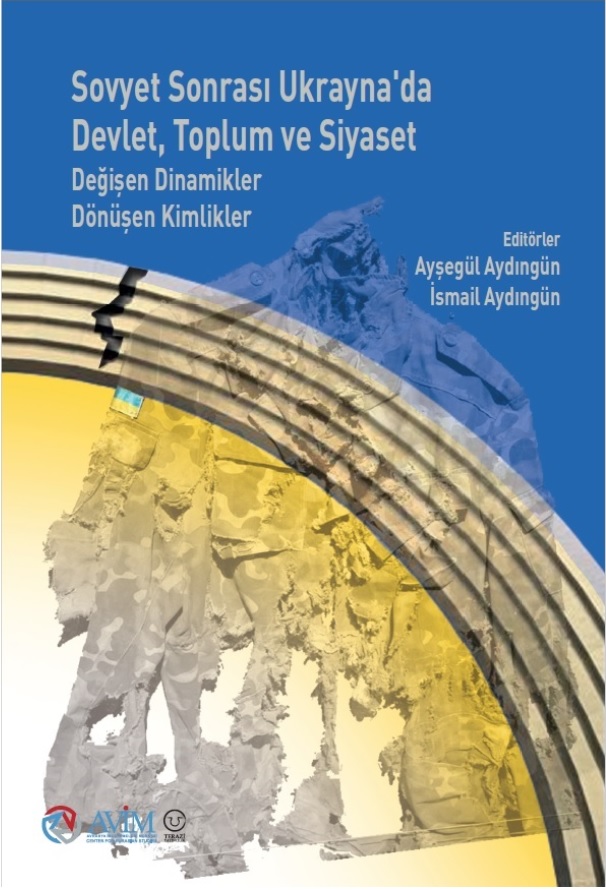
Sovyet Sonrası Ukrayna’da Devlet, Toplum ve Siyaset - Değişen Dinamikler, Dönüşen Kimlikler -
12.06.2018
Ermeni Sorunuyla İlgili İngiliz Belgeleri (1912-1923) - British Documents on Armenian Question (1912-1923) -
02.12.2016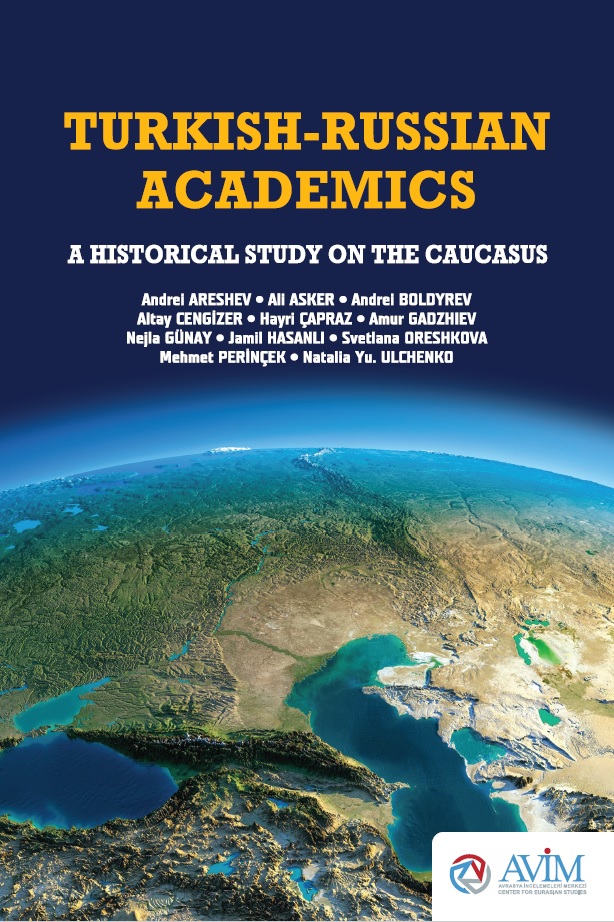
Turkish-Russian Academics: A Historical Study on the Caucasus -
01.07.2016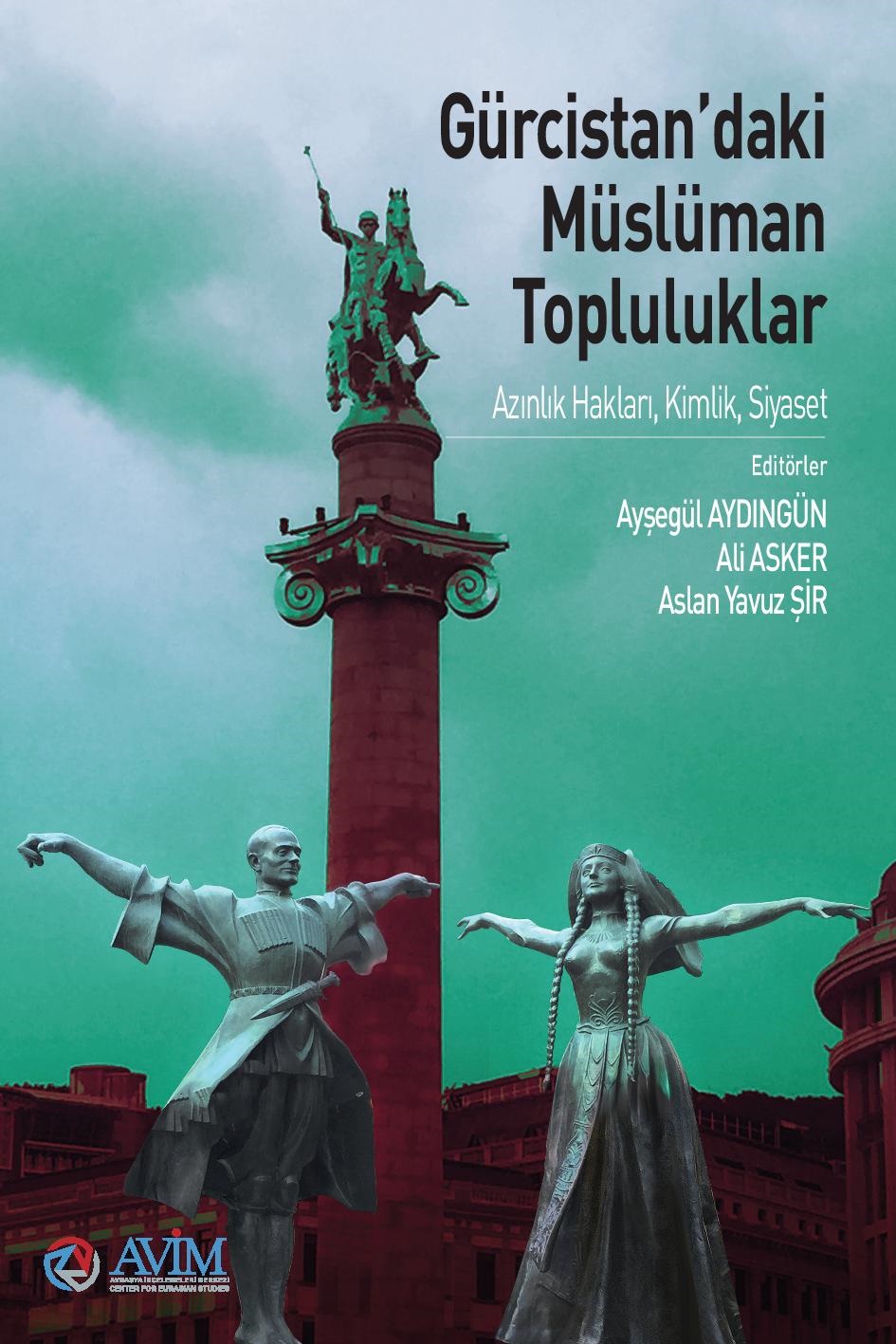
Gürcistan'daki Müslüman Topluluklar: Azınlık Hakları, Kimlik, Siyaset -
10.03.2016
Armenian Diaspora: Diaspora, State and the Imagination of the Republic of Armenia -
24.01.2016
ERMENİ SORUNU - TEMEL BİLGİ VE BELGELER (2. BASKI)
-
AVİM Conference Hall 24.01.2023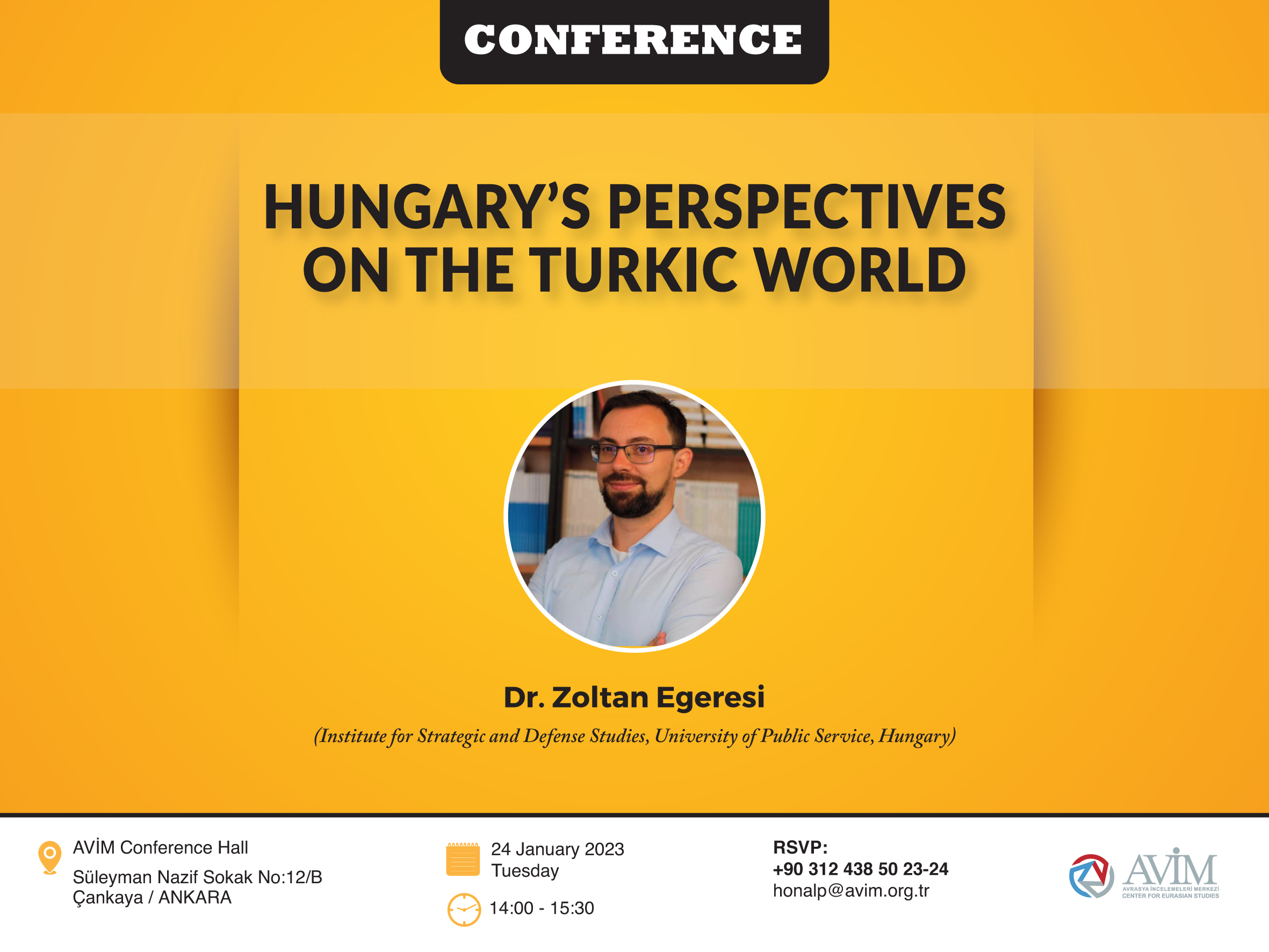
CONFERENCE TITLED “HUNGARY’S PERSPECTIVES ON THE TURKIC WORLD"