

















Newsweek, 04 May 2016
Saddam Hussein testifies at his trial in Baghdad on June 12, 2006. The author writes that dictatorships might buy the illusion of security, but often they contribute to an even more violent explosion down the road. Saddam Hussein took a wealthy country and, absent any system of accountability, ran it into the ground. He also promoted the sectarianism that now afflicts Iraq.
In the wake of the political protests in Baghdad, Barham Salih, a senior Patriotic Union of Kurdistan (PUK) official who has held a variety of positions in both the central Iraqi government and in Iraqi Kurdistan, tweeted, “Chaos in Baghdad; definitive end to 2003 polity. It is no longer about changing government, it is about changing the failed political system.”
Barham is right that the anti-corruption protests, which have culminated in a largely peaceful Green Zone sit-in, are a game-changer. Shiite firebrand Muqtada al-Sadr might be the antithesis of clean government and financial transparency, but his anti-corruption calls have had resonance.
At the same time, the difficulty Prime Minister Haider al-Abadi has had installing a cabinet of technocrats—rather than politicians beholden to various sectarian and ethnic warlords and power brokers—has underlined the loggerheads at which the system now finds itself.
Barham’s tweet is largely pabulum, however: it’s easy to condemn the impasse, but what is the alternative? Barham doesn’t say. Let us hope, however, that he does not mean to turn his back on the idea of democracy in Iraq. To dismiss the democratic process would be counterproductive.
During Barham’s tenure as Iraqi Kurdistan’s prime minister, security forces gunned down protesters in the street. Abadi, for his part, handled the crowds peacefully.
Nor is dictatorship the answer. What Iraqis are seeking is greater accountability for their leaders. Again, Iraqi Kurdistan has done the opposite: Faced with the end of his presidency, Masoud Barzani refused to step down but instead sent military forces into the street in a show of force and forcibly expelled the speaker of the parliament who, under the terms of the law of the presidency, is the interim president until new elections can occur.
Iraqis are cynical about their parliament (with good reasons) but, unlike that in Erbil, the Iraqi parliament actually meets.
While the stability of dictatorship can seem appealing, it’s important to remember what dictatorships have wrought. Saddam Hussein took a wealthy country and, absent any system of accountability, ran it into the ground. He also promoted the sectarianism which now afflicts Iraq.
Syria’s President Bashar al-Assad, meanwhile, ran as rigorous a police state as any Middle Eastern potentate, but it is impossible to oppress citizenry forever.
Some may see salvation in an Egypt-style coup that sees reversion to secular, strongman rule, but Egypt has nowhere near the sectarian complexity that Iraq does, nor do many of the Iraqi Islamist parties aspire to theocratic dictatorship in the same way that Egypt’s Muslim Brotherhood does.
Dictatorships might buy the illusion of security, but often they contribute to an even more violent explosion down the road, especially when presidents try to pass power to their sons or monopolize it within their families.
This is one of the reasons why Special Envoy Brett McGurk’s policy to recognize the illegal extension of Barzani’s term is so short-sighted: There is no evidence that dictatorships respond better to security challenges like those posed by ISIS than do representative governments.
Iraq has many problems, and there are fixes to the system that could promote better governance. Indeed, that is what Abadi has been trying to accomplish by promoting technocratic competence over political patronage and ethnic and sectarian quota.
It is unfortunate that the United States, when it had leverage, did not do more to encourage political parties based on economic philosophy rather than on ethnicity and religion.
Reverting to dictatorship, however, will not now resolve that problem; only time will, as Iraqis recognize that ethnic chauvinism and/or Islamism don’t resolve Iraq’s very real structural and financial woes.
No comments yet.
- LAVROV: MEETING SOON TO BE HELD ON KARABAKH CONFLICT The Caucasus and Turkish-Armenian Relations 05.05.2016
- CAMERON SAYS HIS REFORMS MAKE STAYING IN EU THE BETTER OPTION Europe - EU 05.05.2016
- STANDING BY AFGHANISTAN: THE STRATEGIC CHOICE Asia - Pacific 05.05.2016
- KAZAKHSTAN, RUSSIA AND TWO VERY DIFFERENT APPROACHES TO CRISIS MANAGEMENT Asia - Pacific 05.05.2016
- TOP OFFICIAL: FRONTLINE TENSIONS TO CONTINUE UNTIL LIBERATION OF AZERBAIJAN’S OCCUPIED LANDS The Caucasus and Turkish-Armenian Relations 05.05.2016
-
25.01.2016
THE ARMENIAN QUESTION - BASIC KNOWLEDGE AND DOCUMENTATION -
12.06.2024
THE TRUTH WILL OUT -
27.03.2023
RADİKAL ERMENİ UNSURLARCA GERÇEKLEŞTİRİLEN MEZALİMLER VE VANDALİZM -
17.03.2023
PATRIOTISM PERVERTED -
23.02.2023
MEN ARE LIKE THAT -
03.02.2023
BAKÜ-TİFLİS-CEYHAN BORU HATTININ YAŞANAN TARİHİ -
16.12.2022
INTERNATIONAL SCHOLARS ON THE EVENTS OF 1915 -
07.12.2022
FAKE PHOTOS AND THE ARMENIAN PROPAGANDA -
07.12.2022
ERMENİ PROPAGANDASI VE SAHTE RESİMLER -
01.01.2022
A Letter From Japan - Strategically Mum: The Silence of the Armenians -
01.01.2022
Japonya'dan Bir Mektup - Stratejik Suskunluk: Ermenilerin Sessizliği -
03.06.2020
Anastas Mikoyan: Confessions of an Armenian Bolshevik -
08.04.2020
Sovyet Sonrası Ukrayna’da Devlet, Toplum ve Siyaset - Değişen Dinamikler, Dönüşen Kimlikler -
12.06.2018
Ermeni Sorunuyla İlgili İngiliz Belgeleri (1912-1923) - British Documents on Armenian Question (1912-1923) -
02.12.2016
Turkish-Russian Academics: A Historical Study on the Caucasus -
01.07.2016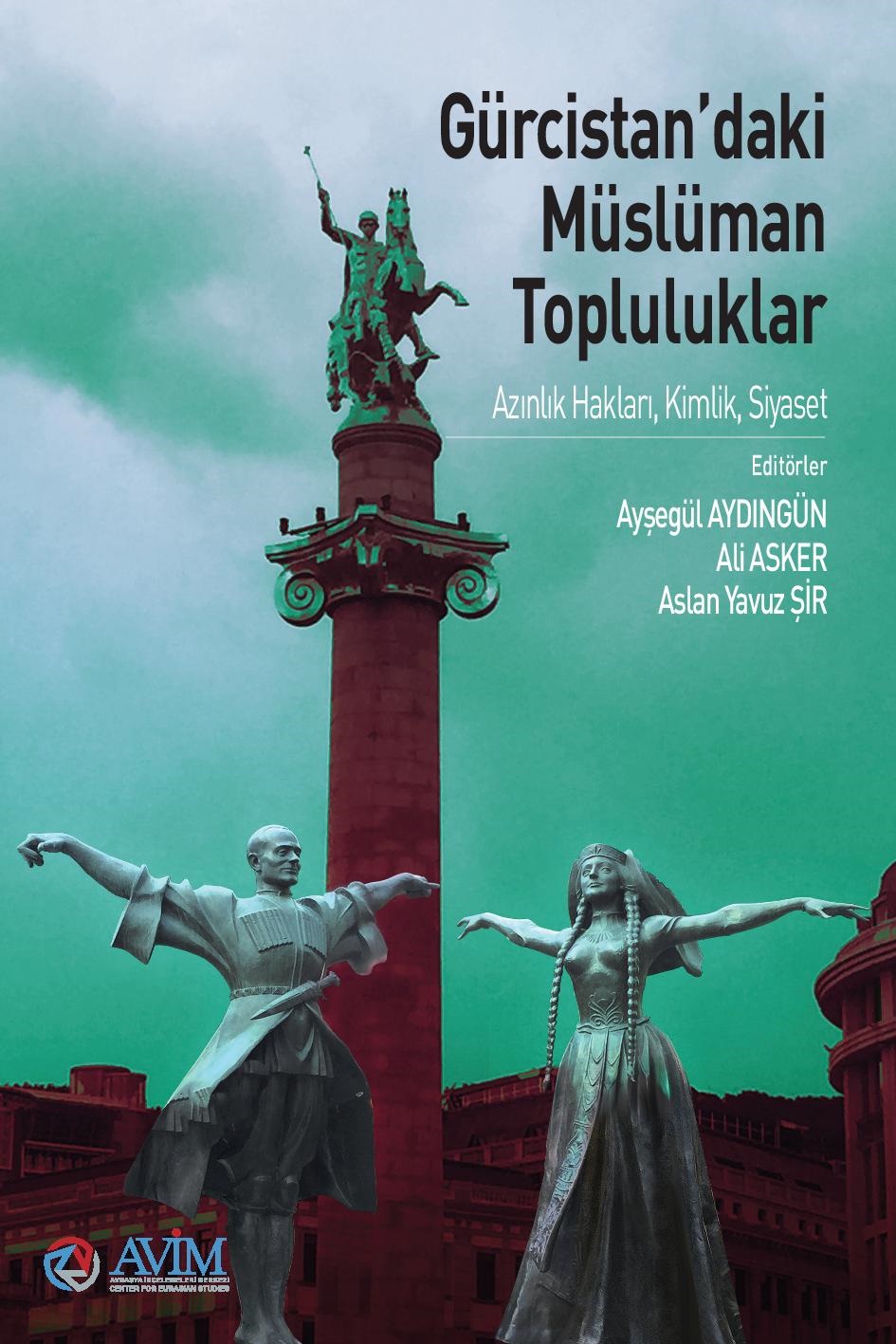
Gürcistan'daki Müslüman Topluluklar: Azınlık Hakları, Kimlik, Siyaset -
10.03.2016
Armenian Diaspora: Diaspora, State and the Imagination of the Republic of Armenia -
24.01.2016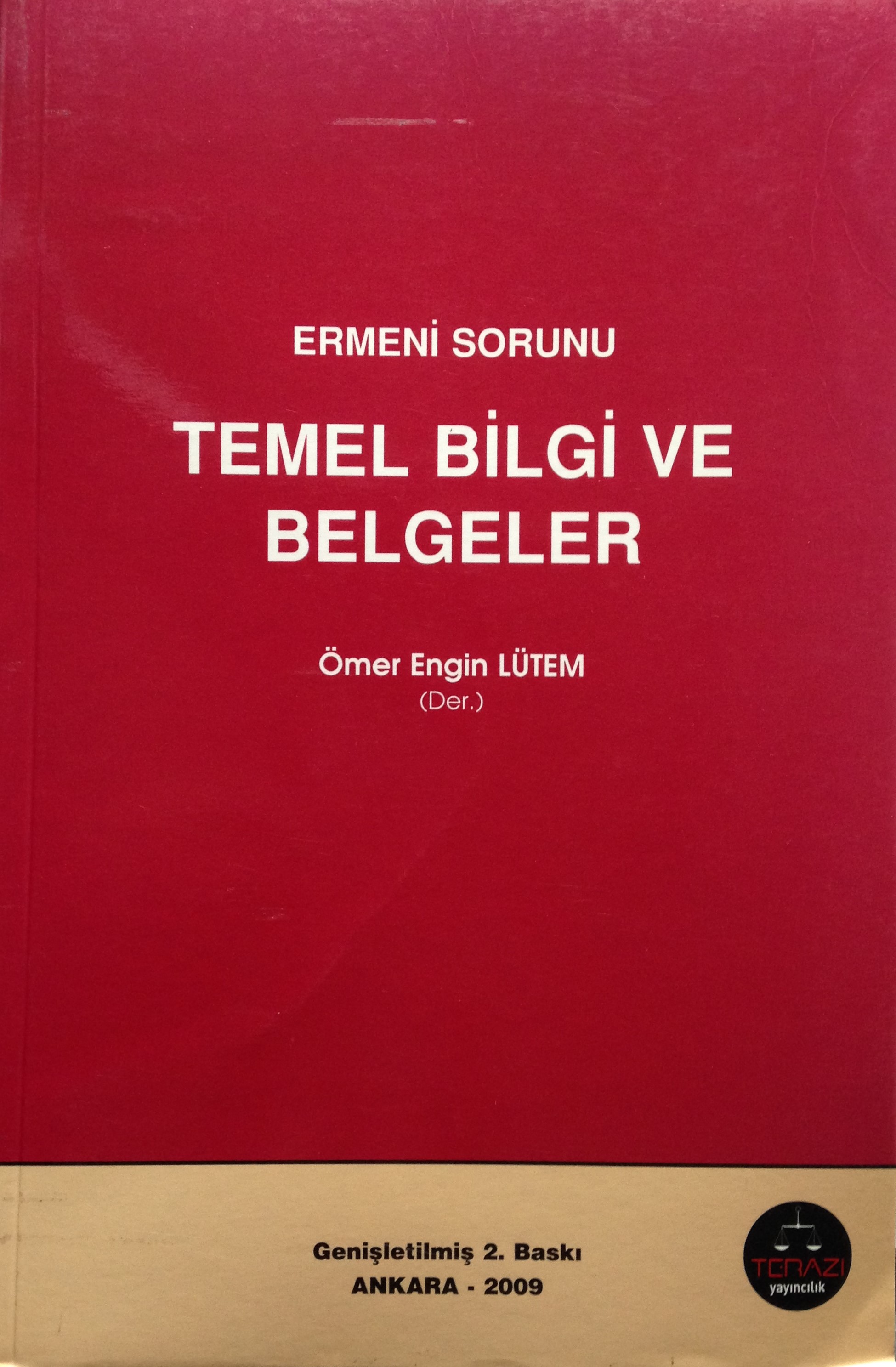
ERMENİ SORUNU - TEMEL BİLGİ VE BELGELER (2. BASKI)
-
AVİM Conference Hall 24.01.2023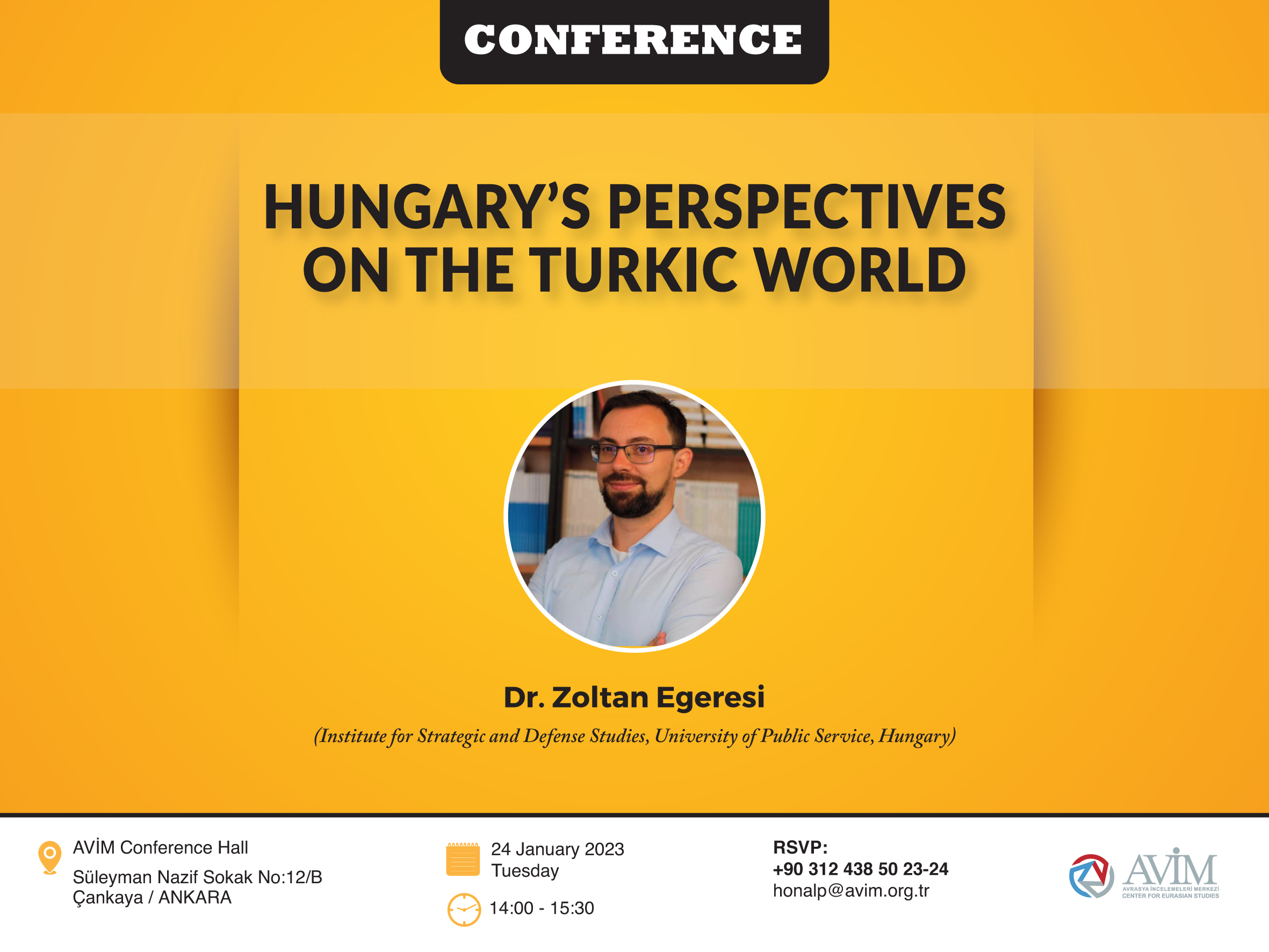
CONFERENCE TITLED “HUNGARY’S PERSPECTIVES ON THE TURKIC WORLD"