
















04.05.2016
DW.de
The Scottish Nationalist Party is on course to secure an unprecedented third term in Thursday's polls. As Peter Geoghegan reports from Glasgow, that makes a second independence referendum very likely.
Her Majesty's Naval Base Clyde - better known as Faslane - is one of Britain's most unexpected sights. Two miles of double razor-wire fences, sentry posts, and watchtowers framed by rolling green Scottish fields and azure Highland sea lochs. Glasgow, the largest city in Scotland, is less than an hour's drive away.
Faslane is home to the biggest political football in Scotland: the Trident nuclear submarines. The renewal of the UK's nuclear deterrent is expected to be rubberstamped by the Commons in London later this year, but many Scots are opposed.
And, as Scotland goes to the polls in Thursday's elections to the devolved parliament in Edinburgh, Trident is once again on the political agenda.
The ruling Scottish National Party, who are widely expected to win a majority of the seats in the Scottish Parliament, is firmly against Trident. "I am opposed to nuclear weapons," says Gail Robertson, SNP candidate in Dumbarton, the constituency that takes in the navel base. "I don't see the economic benefit that some see there is from Trident."
That Robertson is on course to take the seat speaks volumes for the changes in Scottish politics since the 2014 independence referendum. The area around the Faslane navel base was firmly against leaving the United Kingdom, in large part due to fears for the future of the estimated 6,500 workers at the navel base. Now the constituency is set to return a Scottish nationalist for the very first time.
"More and more people are starting to recognize that the area does not benefit from Trident as much as people think," Robertson tells DW when we meet in her office in a former cheque cashing shop. A photograph above the door features the beaming candidate beside the SNP's popular leader Nicola Sturgeon.
SNP on a roll
Sturgeon's party is currently polling around 50 percent, more than enough to secure a majority and an unprecedented third consecutive term in government at the Scottish parliament in Edinburgh. Such has been the nationalists' dominance that the campaign has been a muted affair, with more debate about whether Labour or the Conservatives will finish second than the overall outcome.
The main reason for the SNP's supremacy is the independence referendum that radically re-shaped Scottish politics, says commentator Iain MacWhirter. "Most Scots now believe the country is destined to be independent - it has become the 'new normal' - even if they can't quite see the mechanism through which this will happen."
Meanwhile, the SNP is firmly ensconced as the party of government. "For most Scots a vote for the SNP is now almost above politics; it's a vote for being Scottish. Nicola Sturgeon seems to embody this renewed Scottish identity: smart, presentable, leftish, unapologetic, Scottish without-making-a-thing-of-it," MacWhirter tells DW.
Labour woes
Labour, long the dominant party in Scottish politics, is struggling to adapt. Recently elected leader Kezia Dugdale has pledged to increase taxes to fund public services - a move seen by many as an attempt to erode the SNP's left-wing support - but is struggling to gain much traction in the polls.
When it comes to Faslane, Scottish Labour has reversed its former support for the renewal of Trident. But the local Labour member of the Scottish Parliament remains committed to the nuclear weapons system and has said she will vote against her party.
The Conservatives, however, are unapologetically pro-union, and pro-Faslane. "The naval base brings prosperity to the town," says Tory-supporter Roddy MacKenzie. "Virtually everyone in the town benefits from the base. The nationalists have their blinkers on if they think it would be fine if it went."
While backing for Trident remains strong around the naval base, the independence referendum changed how local people view a nuclear weapons, says Veronika Tudhope, a Scottish Greens list candidate for the West of Scotland. "Awareness of the base really increased during the referendum," she told DW. "People now talk about it far more openly, even if they support Trident."
The only realistic prospect for removing Trident from Scotland is the break-up of the UK. Despite the SNP's strength in the polls, a majority of Scots remain supporters of the three-centuries-old union with England.
Referendum rears its head - again
Nevertheless, the question of a second independence referendum has featured heavily in the latter stages of the election campaign. For the first time, the SNP manifesto does not include an explicit commitment to hold a referendum on leaving the UK, instead stating that the Scottish Parliament should have "the right" to hold another vote if there is "clear and sustained evidence" of a majority in favor of independence.
Asked by a Sunday newspaper last weekend whether she thought there would be a second referendum during her time in office, Nicola Sturgeon replied. "If you're asking me, do I think its more likely than not? Yes."
But another vote on leaving the UK is highly unlikely in the course of the next Scottish Parliament, says David Torrance, author of a biography of Nicola Sturgeon.
"Sturgeon doesn't seem terribly keen on having one, and it's up to her at the end of the day. The key moment seems to be 2020/21 with the 2021 Holyrood [Scottish parliament - the ed.] election providing a clear mandate for a second referendum, although that of course is risky," he told DW.
No comments yet.
- SERVICES AND CONSTRUCTION JOBS REDUCE SPANISH UNEMPLOYMENT TOTAL FOR APRIL Europe - EU 05.05.2016
- MORE POLITICAL TURMOIL LIKELY IN IRAQ AS IRAN WAITS IN THE WINGS Iraq 05.05.2016
- US, EU WARN ALBANIA AGAINST JUDICIAL REFORM DELAY The Balkans 05.05.2016
- RUSSIA OFFERS FREE LAND TO ALL CITIZENS WILLING TO MOVE TO THE FAR EAST Asia - Pacific 05.05.2016
- KAZAKHSTAN, RUSSIA AND TWO VERY DIFFERENT APPROACHES TO CRISIS MANAGEMENT Asia - Pacific 05.05.2016
-
25.01.2016
THE ARMENIAN QUESTION - BASIC KNOWLEDGE AND DOCUMENTATION -
12.06.2024
THE TRUTH WILL OUT -
27.03.2023
RADİKAL ERMENİ UNSURLARCA GERÇEKLEŞTİRİLEN MEZALİMLER VE VANDALİZM -
17.03.2023
PATRIOTISM PERVERTED -
23.02.2023
MEN ARE LIKE THAT -
03.02.2023
BAKÜ-TİFLİS-CEYHAN BORU HATTININ YAŞANAN TARİHİ -
16.12.2022
INTERNATIONAL SCHOLARS ON THE EVENTS OF 1915 -
07.12.2022
FAKE PHOTOS AND THE ARMENIAN PROPAGANDA -
07.12.2022
ERMENİ PROPAGANDASI VE SAHTE RESİMLER -
01.01.2022
A Letter From Japan - Strategically Mum: The Silence of the Armenians -
01.01.2022
Japonya'dan Bir Mektup - Stratejik Suskunluk: Ermenilerin Sessizliği -
03.06.2020
Anastas Mikoyan: Confessions of an Armenian Bolshevik -
08.04.2020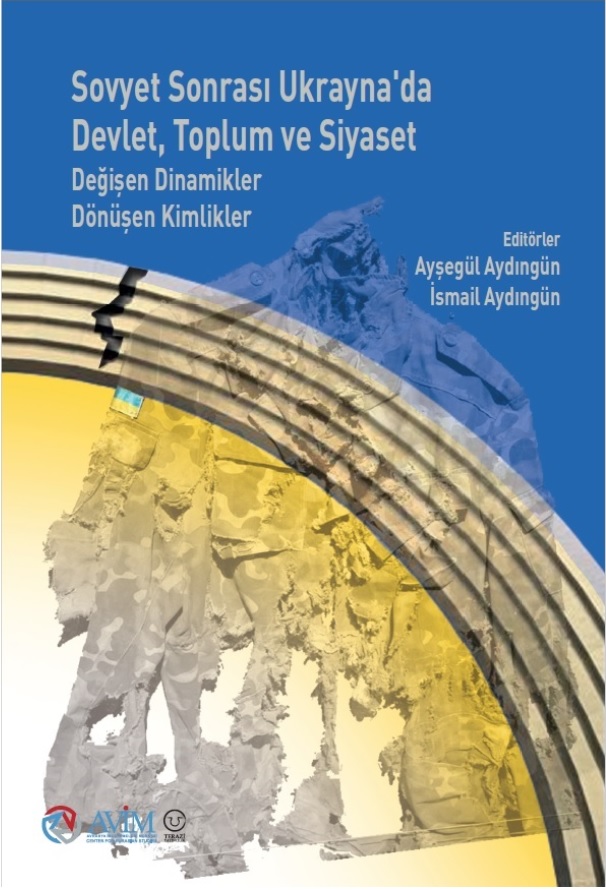
Sovyet Sonrası Ukrayna’da Devlet, Toplum ve Siyaset - Değişen Dinamikler, Dönüşen Kimlikler -
12.06.2018
Ermeni Sorunuyla İlgili İngiliz Belgeleri (1912-1923) - British Documents on Armenian Question (1912-1923) -
02.12.2016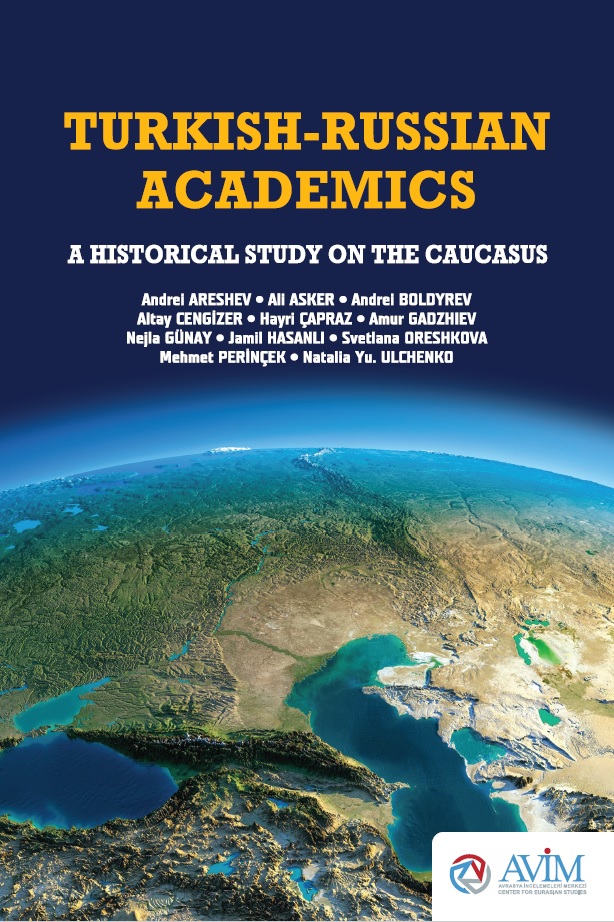
Turkish-Russian Academics: A Historical Study on the Caucasus -
01.07.2016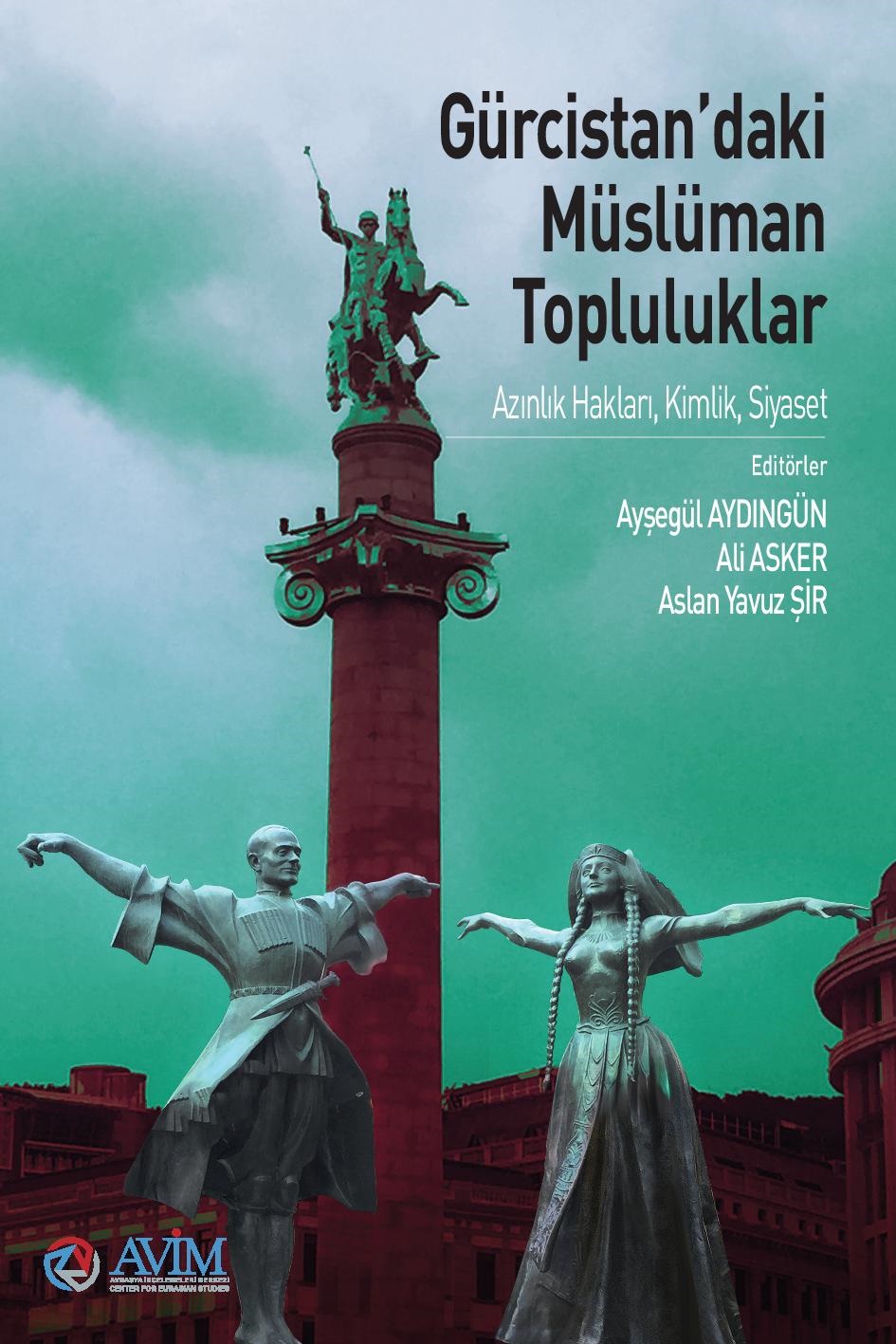
Gürcistan'daki Müslüman Topluluklar: Azınlık Hakları, Kimlik, Siyaset -
10.03.2016
Armenian Diaspora: Diaspora, State and the Imagination of the Republic of Armenia -
24.01.2016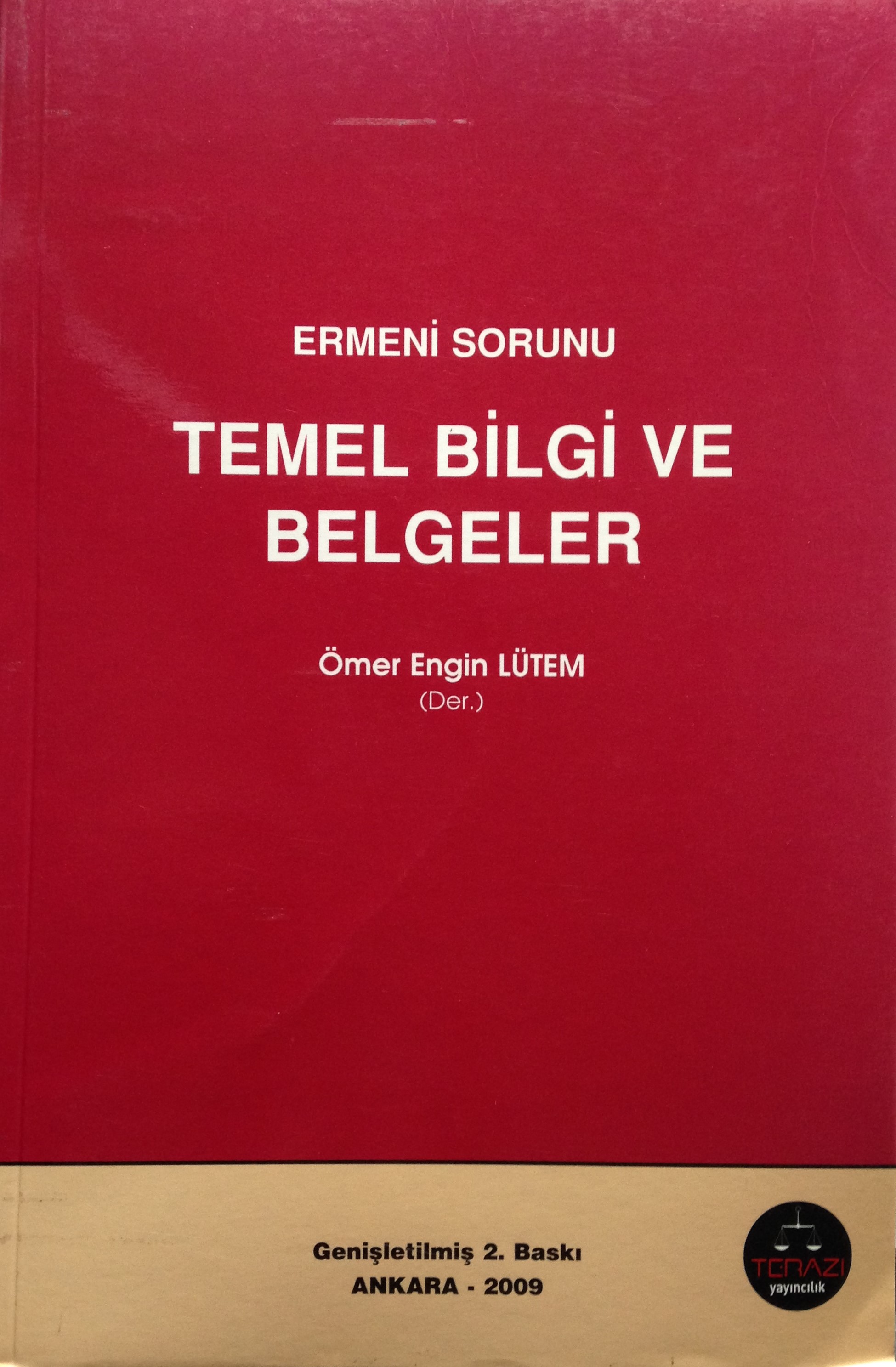
ERMENİ SORUNU - TEMEL BİLGİ VE BELGELER (2. BASKI)
-
AVİM Conference Hall 24.01.2023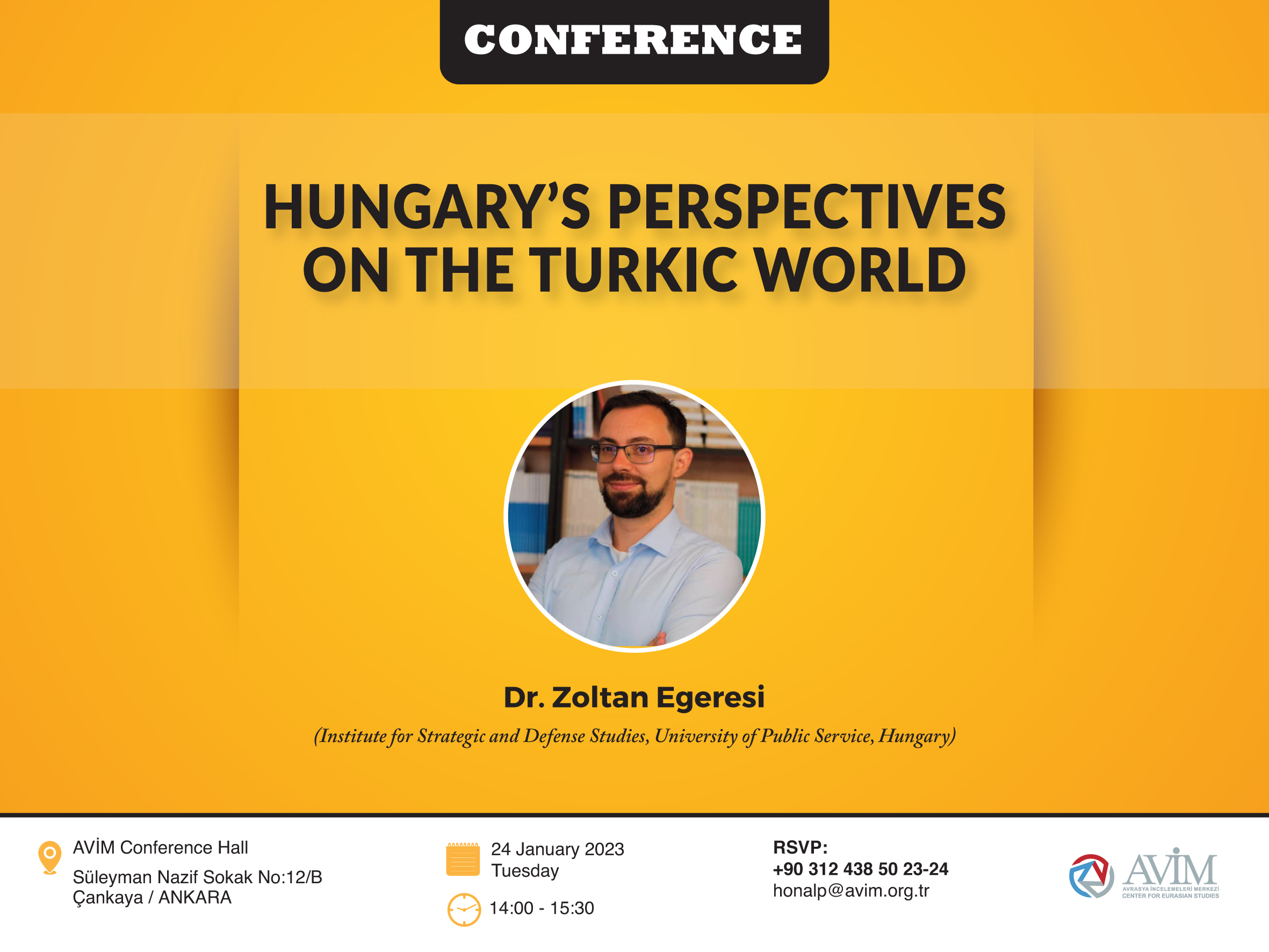
CONFERENCE TITLED “HUNGARY’S PERSPECTIVES ON THE TURKIC WORLD"