

















EurActiv (12 February 2018)
Cabinet Office minister David Lidington is expected to unveil new powers for the UK’s devolved governments this week, in a bid to break the deadlock between them and Theresa May’s administration over an alleged ‘power grab’ by London through its Brexit legislation.
The devolved governments in Scotland, Wales and Northern Ireland are concerned that the EU Withdrawal Bill, which seeks to put the EU acquis into UK law ahead of Brexit in March 2019, hands all powers that should be devolved from Brussels to London. The bill is currently being debated by the House of Lords and is likely to be substantially amended.
The governments in Scotland and Wales have also threatened to oppose the Withdrawal Bill unless the May government makes concessions.
Creating the devolved governments was a policy of Tony Blair’s Labour government in 1998, and there is a sense in the May government that no further powers should be transferred to the Scottish Nationalist-run administration in Edinburgh or Labour-controlled Wales.
Lidington’s speech is expected to be part of a flurry of activity by Theresa May’s ministers in a bid to reclaim control of the government’s drifting Brexit policy.
British MPs approve landmark Brexit bill
British MPs gave the green light on Wednesday (17 January) to a landmark Brexit bill after weeks of debate and a damaging government defeat, but the legislation now faces a battle in the upper chamber.
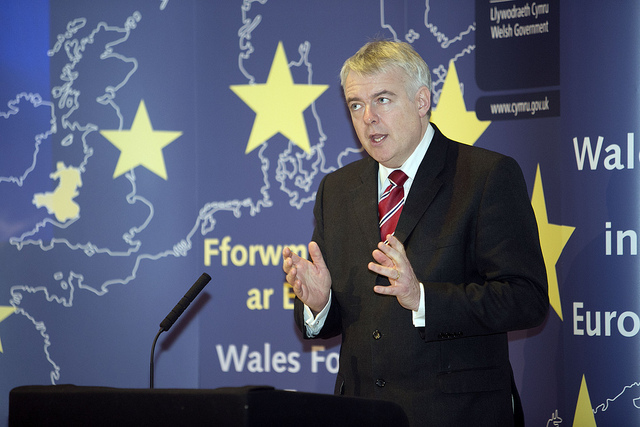
At a hearing of the Welsh Affairs committee on 5 February, Welsh First Minister Carwyn Jones admitted that the devolved governments were potentially “on collision course” with London.
“We don’t want legislative permission to be denied in Scotland and Wales and then overridden,” Jones told MPs, though he insisted that “we are not looking for reasons to block the bill.”
Agriculture, fisheries and immigration, as well as free-trade deals with third countries, are among the main policy areas of contention after Brexit.
“It is a recipe for conflict,” Jones told MPs.
“Fisheries quotas are allocated at European level, we could be in a position where DEFRA (the UK Department for the Environment, Fisheries and Rural Affairs) would dictate the quotas. As a department for England, we couldn’t have confidence that DEFRA would not skew the quota,” he added.
In Wales, assembly members have prepared a ‘Continuity Bill’ that would ensure that EU law would continue to apply after Brexit, in a potential challenge to the UK government.
“Agriculture and food production is a devolved issue in the UK, and they owe it to the governments of Wales, Northern Ireland and Scotland to ensure that they are fully in control of what comes back from Brussels because it’s not in the withdrawal bill,” Lord Rooker, a Labour former agriculture minister, told EURACTIV.
There are also concerns about the Westminster government striking third party trade pacts that could disadvantage devolved parts of the UK.
“A free trade agreement with China would destroy the Welsh steel industry,” Jones warned MPs, adding that “a trade deal with New Zealand…if that led to large amounts of New Zealand lamb coming in would badly affect the Welsh lamb industry”.
“I don’t argue that we should have a veto but there should be consultation,” said Jones, who mooted the possibility of establishing a UK Council of Ministers.
However, UK ministers are wary of the prospect of a more federalised UK, mindful of the fact that the EU-Canada trade pact was almost derailed by the Wallonian parliament in Belgium in October 2016.
The administrations in Edinburgh and Cardiff have also issued separate demands for control of their own immigration policy.
“There is now an overwhelmingly strong case for Scotland to have the power to tailor its own migration policy to reflect its own unique circumstances,” said Scotland’s external affairs minister, Fiona Hyslop, who launched a paper on the country’s migration needs on 7 February. There are an estimated 219,000 EU citizens living in Scotland.
Last September, a Welsh government paper called for a reform of UK immigration policy to recognize its needs.
No comments yet.
- IRAQI TRIBESMEN WARN ISIL FIGHTERS' FAMILIES Iraq 13.02.2018
- AZERBAIJANI FM RECEIVES VATICAN SECRETARY OF RELATIONS WITH STATES The Caucasus and Turkish-Armenian Relations 13.02.2018
- MERKEL DEFENDS COALITION DEAL ON GERMAN TV Europe - EU 13.02.2018
- VUCIC HANDS FILES ON MISSING SERBS TO CROATIA The Balkans 13.02.2018
- IRAQ BOOSTS ASIAN OIL EXPORTS TO NEW RECORD Iraq 13.02.2018
-
25.01.2016
THE ARMENIAN QUESTION - BASIC KNOWLEDGE AND DOCUMENTATION -
12.06.2024
THE TRUTH WILL OUT -
27.03.2023
RADİKAL ERMENİ UNSURLARCA GERÇEKLEŞTİRİLEN MEZALİMLER VE VANDALİZM -
17.03.2023
PATRIOTISM PERVERTED -
23.02.2023
MEN ARE LIKE THAT -
03.02.2023
BAKÜ-TİFLİS-CEYHAN BORU HATTININ YAŞANAN TARİHİ -
16.12.2022
INTERNATIONAL SCHOLARS ON THE EVENTS OF 1915 -
07.12.2022
FAKE PHOTOS AND THE ARMENIAN PROPAGANDA -
07.12.2022
ERMENİ PROPAGANDASI VE SAHTE RESİMLER -
01.01.2022
A Letter From Japan - Strategically Mum: The Silence of the Armenians -
01.01.2022
Japonya'dan Bir Mektup - Stratejik Suskunluk: Ermenilerin Sessizliği -
03.06.2020
Anastas Mikoyan: Confessions of an Armenian Bolshevik -
08.04.2020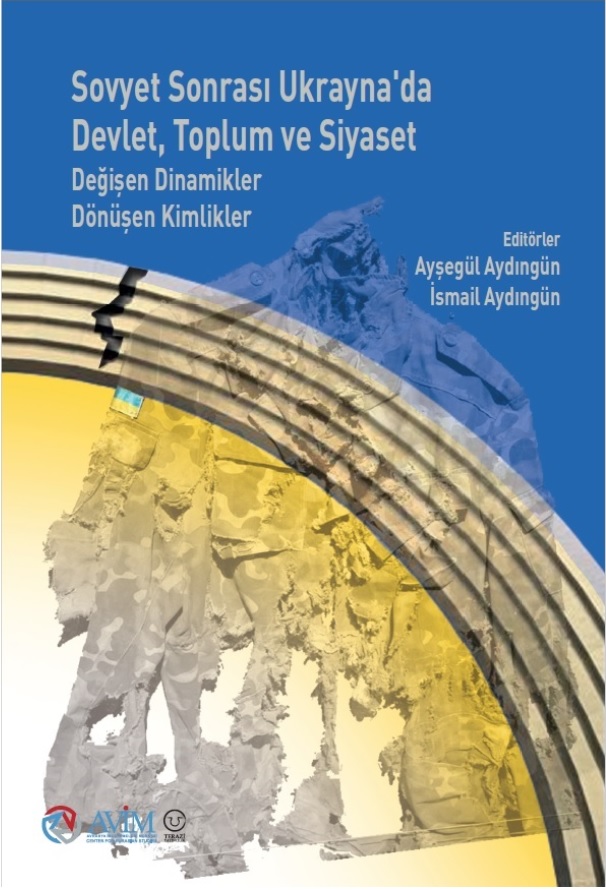
Sovyet Sonrası Ukrayna’da Devlet, Toplum ve Siyaset - Değişen Dinamikler, Dönüşen Kimlikler -
12.06.2018
Ermeni Sorunuyla İlgili İngiliz Belgeleri (1912-1923) - British Documents on Armenian Question (1912-1923) -
02.12.2016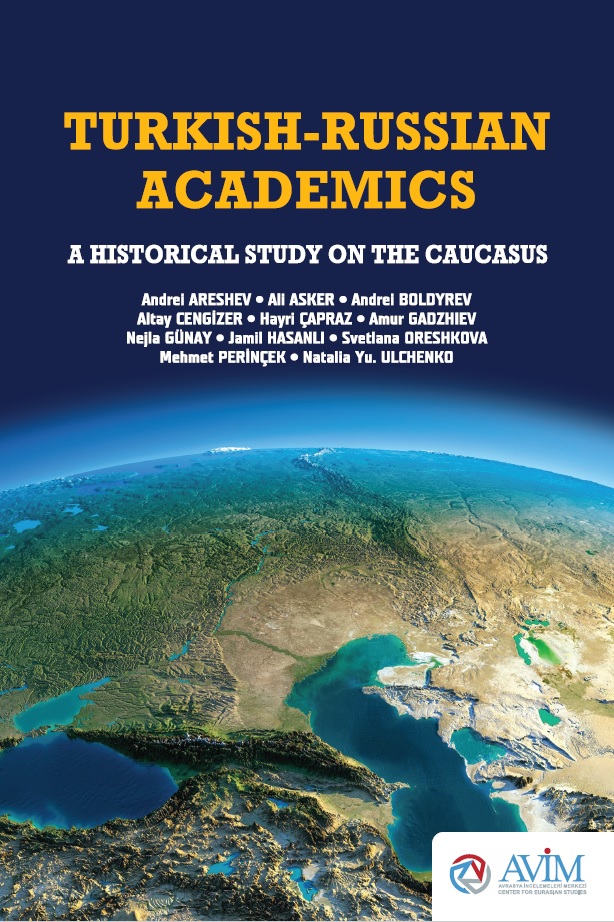
Turkish-Russian Academics: A Historical Study on the Caucasus -
01.07.2016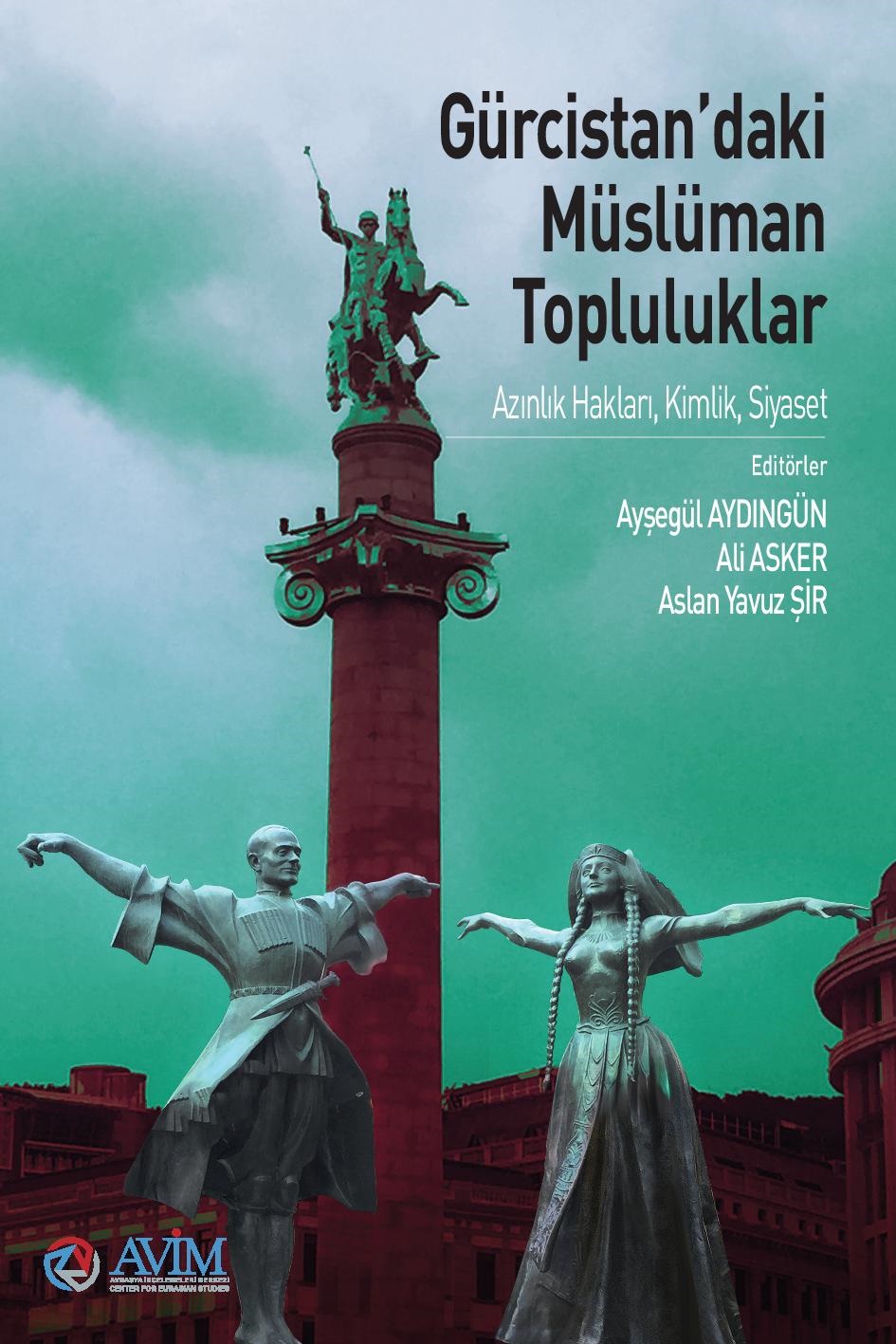
Gürcistan'daki Müslüman Topluluklar: Azınlık Hakları, Kimlik, Siyaset -
10.03.2016
Armenian Diaspora: Diaspora, State and the Imagination of the Republic of Armenia -
24.01.2016
ERMENİ SORUNU - TEMEL BİLGİ VE BELGELER (2. BASKI)
-
AVİM Conference Hall 24.01.2023
CONFERENCE TITLED “HUNGARY’S PERSPECTIVES ON THE TURKIC WORLD"