This is the English translation of a Turkish language article that was originally published by AVİM on 6 April 2026.
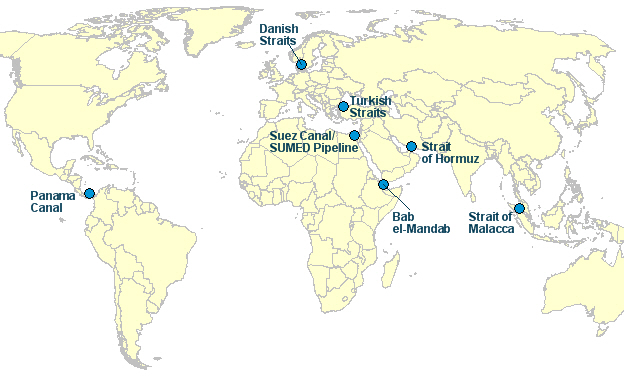
The growing fragility of global trade in the recent period has brought the strategic importance of maritime straits back into focus. In this context, while the Strait of Hormuz stands out as a classic example of a 'chokepoint' at the heart of energy flows, assessments suggesting that the Black Sea has assumed a similar role following the Russia-Ukraine War have increased. Indeed, some analyses suggest that the Black Sea corridor has gained strategic importance on a level capable of competing with the Strait of Hormuz.[1]However, such comparisons risk reflecting a reductionist approach that fails to sufficiently account for the Black Sea’s legal status and operational dynamics.
The importance of the Strait of Hormuz stems not only from geopolitical and economic imperatives but also from long-standing geopolitical tensions. A significant portion of global oil and liquefied gas trade passes through this chokepoint, and lack of alternative routes makes the region structurally vulnerable. Nevertheless, the key factor that makes the Strait of Hormuz a classic 'chokepoint' is the ongoing political and military tension between Iran versus United States and Israel. Iran’s threats to close the strait in response to sanctions and its demonstration that Iran can use this passage as a strategic leverage further exacerbate the region’s fragility. The recent military tensions in the region have indeed caused disruptions in maritime traffic and fluctuations in energy prices, demonstrating the direct impact of the Strait of Hormuz on the global system. This makes Hormuz not merely a chokepoint but also a global flashpoint where geopolitical pressure materializes. Assessments regarding global trade’s dependence on chokepoints also emphasize that such geographical and political bottlenecks generate systemic risks.[2]
In contrast, assessing the Black Sea within this framework constitutes a flawed generalization based on superficial similarities. Access to the Black Sea and the passage system through the Turkish Straits are clearly and bindingly regulated by the Montreux Convention regarding the regime of the Straits. This convention guarantees the principle of free navigation for merchant ships and establishes a system that ensures balance and security in the Black Sea by regulating transit in accordance with international law.[3] In this regard, the Black Sea is not merely a geographical transit point but a legally defined and protected sea of peace.
The key difference distinguishing the regime established by the Montreux Convention Regarding the Regime of the Straits from Hormuz is that passage through the Turkish Straits is regulated not by military power balances or political pressures, but by a pre-established rules guaranteed by international law. While the transit security in the Strait of Hormuz depends on regional military balances and deterrence, entry into and exit from the Black Sea takes place within a specific framework established by Montreux Convention. Türkiye’s role as the implementing authority of the Convention is the central pillar ensuring the continuity of this regime. In this sense, the Black Sea is shaped not as an arena of unrestrained power competition, but as a rules-based system in which maritime transit is governed by established legal principles. From this perspective, transit in the Black Sea takes place within a system constrained by international law, rather than serving as a pressure instrument open to unilateral intervention by any single state. This distinction also explains why the Black Sea cannot be regarded as a ‘chokepoint’ in the classical sense. The concept of a chokepoint is generally defined by geographical narrowness and the limited availability of alternative routes. In the case of the Black Sea, however, the determining factor is not geography but the legal regime under the Montreux Convention. In other words, vulnerability in the Black Sea is not geographical but largely contingent upon political and security developments, and this vulnerability is constrained by the Convention.
The Black Sea’s growing strategic importance in recent years has been more closely linked to food security and supply chains. Disruptions to grain shipments from Ukraine have had serious global repercussions and heightened the region’s importance. The establishment of the Black Sea Grain Initiative and the coordination center in Istanbul has demonstrated the Black Sea’s pivotal role in global food security.[4] This indicates that the importance of the Black Sea is structured along a distinct economic axis, rather than being energy-driven as in Hormuz. Recent security incidents targeting commercial vessels in the Black Sea, particularly attacks on oil tankers and incidents occurring in areas close to the Straits, demonstrate that risks to maritime trade have not been completely eliminated. The report indicating that a crude oil tanker carrying Russian oil was struck by a marine drone in the Black Sea near Türkiye can also be cited as an example of such incidents.[5]Furthermore, European countries’ growing commitment to adopt stricter measures against Russia’s ‘shadow fleet’ of oil tankers demonstrates that maritime trade remains, at times, subject to geopolitical competition.[6]However, although these developments may increase the risk level in the Black Sea, they do not imply that the region possesses a structural vulnerability equivalent to that of Hormuz. The fact that transit in the Black Sea operates within a framework governed by international law and established rules constitutes the most important factor preventing the region from turning into an entirely uncontrolled crisis zone.
In conclusion, while the importance of maritime chokepoints such as Hormuz, Malacca, Bab el-Mandeb, Suez and Panama is increasing within the global trade system, it would be analytically misleading to treat them as structurally equivalent. The case of the Black Sea presents a distinct model in which legal arrangements, alongside geographical and economic factors, play a determining role. Therefore, despite its growing strategic importance, the Black Sea should not be categorized as a ‘chokepoint’ equivalent to the Strait of Hormuz, but it should be assessed within the context of its unique status shaped by the Montreux Convention regarding the regime of the Straits.
© 2009-2025 Center for Eurasian Studies (AVİM) All Rights Reserved
















 THE PEACE WATER PIPELINE PROJECT CAN BE UPDATED THROUGH EXPANSION
 ORGANIZATION OF TURKIC STATES: THE INSTITUTIONALIZATION OF THE TURKIC WORLD
 CHANGING ARCTIC AGENDA AT THE DAVOS SUMMIT
 WHERE IS KAZAKHSTAN HEADED IN THE MIDDLE EAST AND THE EASTERN MEDITERRANEAN?
 PASHINYAN INTRODUCES A NEW APPROACH TO THE PRESENTATION OF THE GENOCIDE ALLEGATION
 THE BRICS SUMMIT 2023
 ON THE POPULATION EXCHANGE BETWEEN GREECE AND TURKEY