

















By Dmitriy Frolovskiy
The Diplomat, April 25, 2016
The unforeseen rise of the Islamic State (ISIS) has revealed the vigor of transnational jihadism and the need to confront it in the early stages. Chances of repeating the Iraqi scenario in Afghanistan are high as the country could devolve into a battlefield of roughly 50,000 jihadists and 4,000 extremist groups fighting against each other. The Kremlin is currently concerned that Afghanistan might turn into a new hotspot amidst the end of NATO combat missions and the gradual withdrawal of U.S. troops.
According to the United Nations, ISIS has a presence in 25 of Afghanistan’s provinces, and Russia believes that the group has more than 3,000 fighters within the country, including those coming from the Northern Caucasus. A growing number of jihadists might spill militancy over to Central Asia and southern Russia, which is why Vladimir Putin has described the situation in Afghanistan as “close to critical.”
Moscow does not hold any faith in the Afghan forces’ capability to rebuff extremists. Despite NATO’s efforts to train the Afghan army, it has been chronically struggling to get military recruits; up to 40 percent of registered Afghan forces simply do not exist. Just like in Iraq on the cusp of the Islamic State’s emergence, Afghanistan is suffering from the notorious ‘ghost soldier’ phenomenon. As a result, the Kremlin recognizes the impending necessity of training and arming local troops.
Moscow is currently in talks with the government in Kabul regarding supplies of combat helicopters and other heavy weapons; it additionally recently shipped 10,000 Kalashnikov assault rifles and millions of rounds of ammunition to Afghanistan. In addition, Russia has been actively training the Afghan forces since the beginning of the NATO mission and is likely to expand its outreach in the near future. Furthermore, the Kremlin is exploring other options of containing the rise of ISIS by arming well-known groups from the Soviet war in Afghanistan, including the Taliban.
Last year the Taliban seized the northern Afghan city of Kunduz, close to the border with Tajikistan, for three days, which came as a shock to NATO and many in Kabul. The Taliban’s strongholds are traditionally located in the southern and eastern parts of the country, as well as among the Pashtun tribal areas. Kunduz Province, by contrast, is an ethnically mixed region predominantly consisting of Uzbeks, Tajiks, and Hazaras and used to be a major recruitment base for the former Northern Alliance, the Taliban’s enemy. The Taliban’s insurgency has, likewise, increased in Badakhshan, another province neighboring Tajikistan.
It is becoming evident that support for the group is coming via certain routes in Tajikistan and arguably points to the Kremlin’s hand. The allegation seems more credible amid the earlier announcement of a limited information exchange between the Kremlin and the Taliban in order to combat the Islamic State in Afghanistan.
As strange as it seems, the Taliban currently does not pose a direct threat to Russia’s domestic situation, nor does it challenge Moscow’s influence in Central Asia. In effect, Moscow can afford to use the Taliban against other radical jihadi groups, providing a temporary buffer in northern Afghanistan against the Islamists’ spillover into Tajikistan. In the Kremlin’s eyes, the group’s ideology has a stronger affiliation with Afghan tribalism and nationalism than with transnational and global jihadism, which is why it is deemed less dangerous.
Russia is traditionally pragmatic. It applies a realpolitik approach in order to assure that the Islamic insurgency will stay within Afghanistan’s borders — by any means necessary. The Kremlin is afraid that wealthy and well-trained groups similar to ISIS could easily bribe and get influence among Taliban leaders and split the group from within. Thus, it is important to keep the Taliban strong and skillfully juxtapose it against other extremists, as well as maintaining the strength of the group’s leadership.
The Kremlin also remembers the U.S. blunder of arming the mujahideen that eventually became al-Qaeda. This is a dangerous game but the Kremlin has no other cards to play at the moment. Therefore, Moscow is planning to empower the Taliban only to a certain extent and exclusively with non-sophisticated assault weapons.
By arming the Afghan troops and helping the Taliban, the Kremlin is also trying to postpone the imminent internal fighting in Afghanistan. In the meantime, Moscow is solidifying its military presence in neighboring Tajikistan.
Russia already has the 6,000-strong 201st Motorized Rifle Division in Tajikistan and has been constantly supplying it with military reinforcements, including attack helicopters. The Kremlin, likewise, understands that ISIS might actively operate within the country. The alarming incident when Colonel Gulmurod Khalimov deserted his unit and joined ISIS shows that the group already has sympathizers at the top level within local security structures. It is important for Russia to prepare for the worst on both sides of Tajik-Afghan Border.
No comments yet.
- AFGHANISTAN WAS 'NATION BUILDING AT GUNPOINT' Asia - Pacific 26.04.2016
- ERDOGAN VISITS CROATIA TO BOLSTER TURKEY'S EU ROLE The Balkans 26.04.2016
- KURDS AND SHI'ITES CLASH IN NORTHERN IRAQ DESPITE CEASEFIRE Iraq 26.04.2016
- VUCIC: NEW SERBIAN CABINET TO BE FORMED AFTER MAY 28 The Balkans 26.04.2016
- PORTUGAL MARKS 42ND ANNIVERSARY OF “CARNATION” REVOLUTION Europe - EU 26.04.2016
-
25.01.2016
THE ARMENIAN QUESTION - BASIC KNOWLEDGE AND DOCUMENTATION -
12.06.2024
THE TRUTH WILL OUT -
27.03.2023
RADİKAL ERMENİ UNSURLARCA GERÇEKLEŞTİRİLEN MEZALİMLER VE VANDALİZM -
17.03.2023
PATRIOTISM PERVERTED -
23.02.2023
MEN ARE LIKE THAT -
03.02.2023
BAKÜ-TİFLİS-CEYHAN BORU HATTININ YAŞANAN TARİHİ -
16.12.2022
INTERNATIONAL SCHOLARS ON THE EVENTS OF 1915 -
07.12.2022
FAKE PHOTOS AND THE ARMENIAN PROPAGANDA -
07.12.2022
ERMENİ PROPAGANDASI VE SAHTE RESİMLER -
01.01.2022
A Letter From Japan - Strategically Mum: The Silence of the Armenians -
01.01.2022
Japonya'dan Bir Mektup - Stratejik Suskunluk: Ermenilerin Sessizliği -
03.06.2020
Anastas Mikoyan: Confessions of an Armenian Bolshevik -
08.04.2020
Sovyet Sonrası Ukrayna’da Devlet, Toplum ve Siyaset - Değişen Dinamikler, Dönüşen Kimlikler -
12.06.2018
Ermeni Sorunuyla İlgili İngiliz Belgeleri (1912-1923) - British Documents on Armenian Question (1912-1923) -
02.12.2016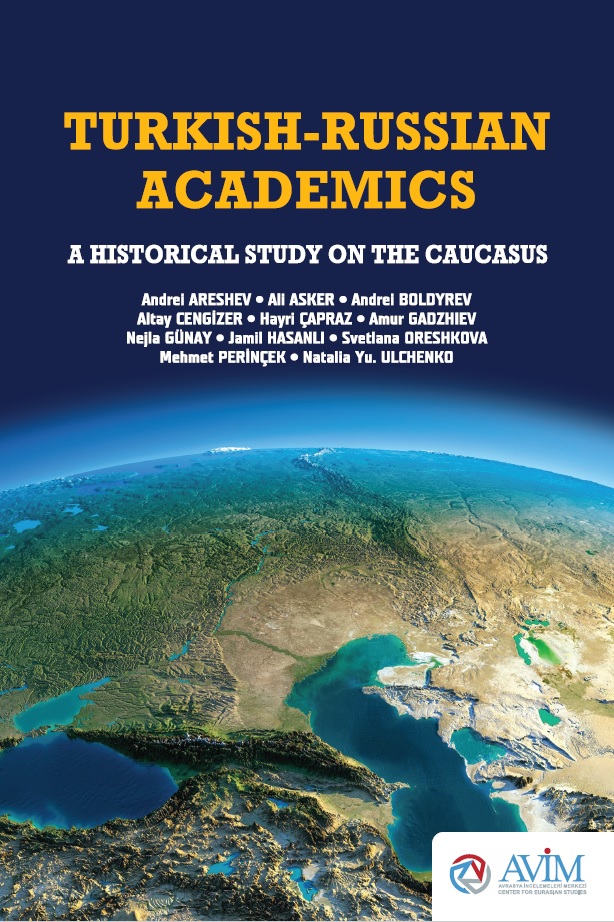
Turkish-Russian Academics: A Historical Study on the Caucasus -
01.07.2016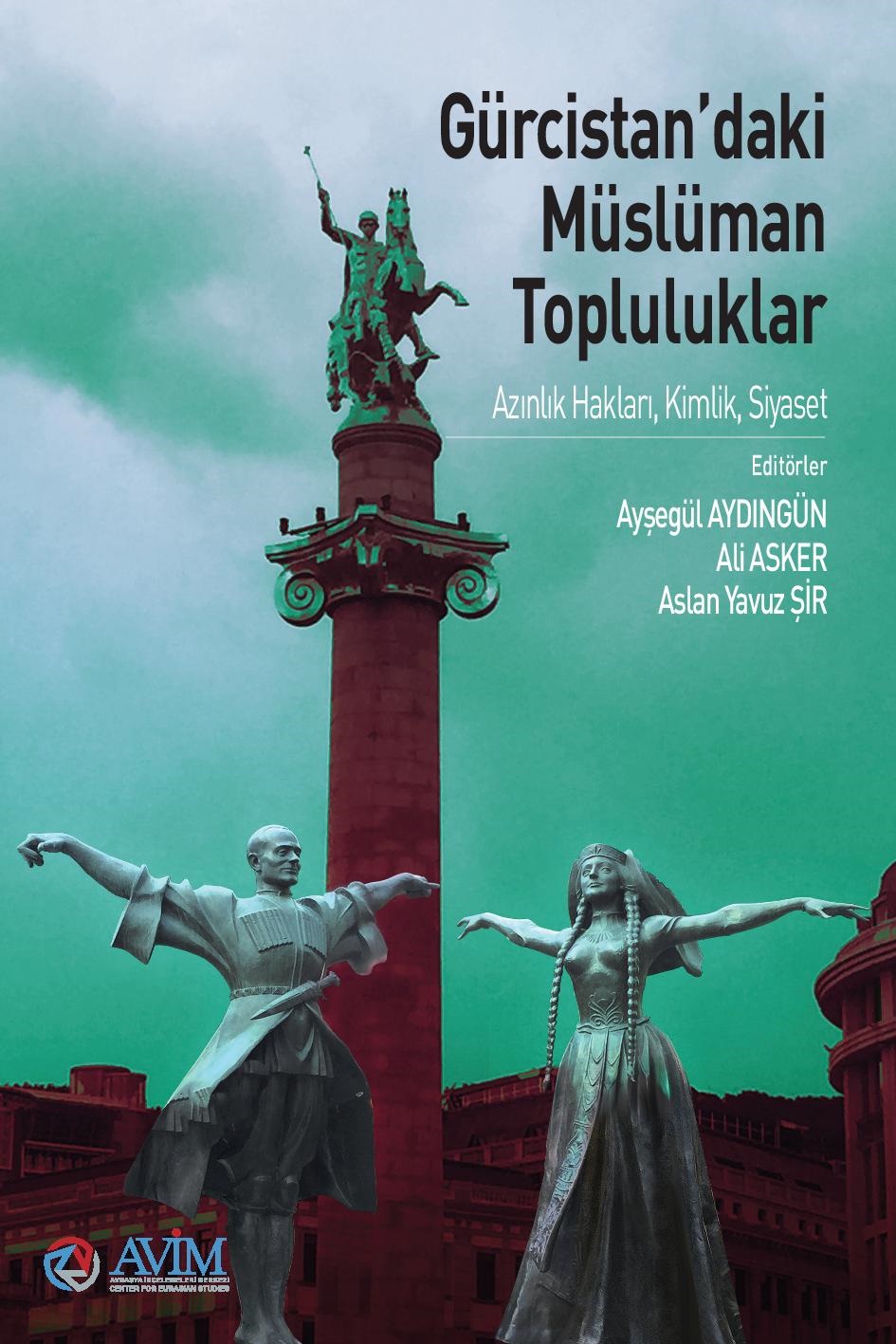
Gürcistan'daki Müslüman Topluluklar: Azınlık Hakları, Kimlik, Siyaset -
10.03.2016
Armenian Diaspora: Diaspora, State and the Imagination of the Republic of Armenia -
24.01.2016
ERMENİ SORUNU - TEMEL BİLGİ VE BELGELER (2. BASKI)
-
AVİM Conference Hall 24.01.2023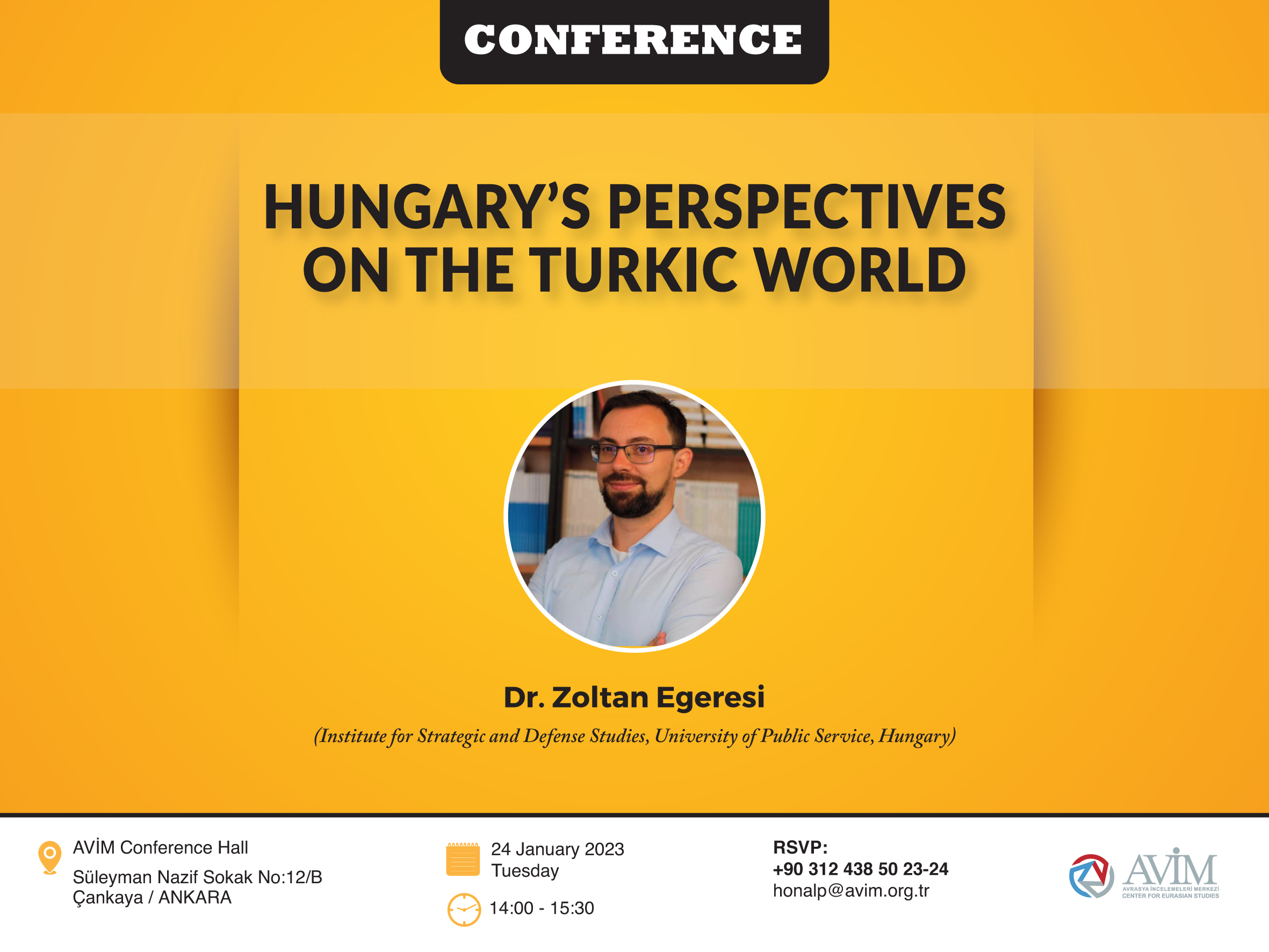
CONFERENCE TITLED “HUNGARY’S PERSPECTIVES ON THE TURKIC WORLD"