

















Balkan Insight (24 September 2018)
As Bulgaria’s President, Rumen Radev, shifts away from supporting the opposition and – at the same time – challenges the Prime Minister, experts see this as a sign that he wants to show that he is a political force to be reckoned with.
However, they add that while Radev may have gained some political experience during the first two years of his mandate, his ideological and political positions remain unclear.
Nevertheless, his ambitions, which are already stirring political tensions, may have an even greater impact on Bulgaria if he forms his own party, which seems to be his direction, pundits add.
Ever since Boyko Borissov’s ruling GERB party lost the 2016 presidential election to the opposition Bulgarian Socialist Party’s candidate, an ex-air force Commander General, the two men have been at odds.
As Radev gradually builds up his political experience, and as the GERB-United Patriots coalition suffers from involvement in more and more scandals, almost daily exchanges of fire have taken place between Bul. Dondukov, 1 – the address of the Council of Ministers – and Bul. Dondukov, 2 – the office of the President.
Analysts say the tension brewing between the two institutions is mainly caused by Radev’s own attempts to present himself as an alternative authority to Prime Minister Borissov, and by his long-term goals to establish himself as a new central political figure.
Battle lines are being drawn:
The ruling coalition has given Radev plenty of ammunition and targets for his political attacks recently.
At the beginning of this week, Radev created a standoff with the government when he refused to relieve the acting Secretary General of the Interior Ministry, Mladen Marinov, from his duties, so that he could be voted in as the Interior Minister.
Radev insisted that the Council of Ministers formally propose Marinov’s dismissal first.
The leader of the GERB group in parliament, Tsvetan Tsvetanov, accused Radev of “seeking a provocation.”
The President on Tuesday responded that he was not initiating a political war but just following the law. “It appears that the government finds it impossible to adhere to the law, and this is not the first time this has happened,” Radev said, sarcastically.
He added that, by law, the Council of Ministers must submit a formal proposal before he can dismiss an official from his or her post.
The Council of Ministers eventually put Marinov’s dismissal on its Wednesday agenda.
Radev and Borissov clashed earlier over who should represent Bulgaria at this year’s UN General Assembly.
In the last eight years, the President has always gone to UN headquarters in New York. But this year it was announced that the PM would attend the event instead.
Finally, Radev is continuing a battle to block planned changes to the Administrative Process Code, APC.
These would massively increase court fees by over 70 times for citizens and NGOs suing the state over human rights issues like police custody, discrimination or labour issues.
On Tuesday, the President announced he was taking the proposed changes to the APC to the Constitutional court.
Aiming for a central political position:
Evelina Slavkova, a sociologist from the research Trend agency, told BIRN that Radev wants to send a message to the GERB party.
It is that they should not feel as comfortable as they were during the previous presidential mandate of Rosen Plevneliev, who won his position on their ticket.
Radev clearly wants to position himself in the public as a new central political figure in the country, she noted.
According to her, this was clear during Radev’s speech on September 3, when he dismissed the possibility of new elections, saying there was no current alternative to the GERB majority.
The expert said the statement showed that Radev intended to criticize the ruling party and at the same time distance himself from the opposition Socialists that nominated him.
“There was an additional nuance in his speech, that the BSP is not an alternative,” she said.
“If his actions until now were more or less synchronized with the main opposition party, now, since he gained experience and political self-confidence, he does not want to be associated directly with them,” Slavkova added.
Stoycho Stoychev, an Associate Political Science Professor at Sofia University, suspects Radev is laying the groundwork for his political future, either through the formation of a new party, or through some other party that he would endorse.
Stoychev said Radev’s medium-term plans may play out by the next regular parliamentary elections, due in 2021.
Either way, Radev’s political ambitions received a welcome boost on Monday, when a number of left-wing intellectuals, ex-diplomats and academics launched a committee calling on him to lead the “march towards Bulgarian unity”.
May be too early to start own party:
Slavkova said the President has regularly hinted at establishing his own party at some point.
“In the nuances of his recent speeches, there are references to him getting ready to establish his own political force – not unlike his predecessor, Georgi Parvanov and his Alternative for Bulgarian Revival, ABV party,” she recalled.
However, she doubts that the time is right yet for Radev to start making concrete plans for his political life after his presidential mandate ends; he hasn’t even reached the halfway point of his term.
Stoychev, meanwhile, suggested that Radev’s growing ambitions are not necessarily linked to any concrete alternative political vision, but are merely an attempt to present himself as a competing authority to Borissov.
“The contentions being created are based on personal differences, not on competing political visions,” he told BIRN
“They are created by the President, because his aim is to present himself as an alternative to Borissov in the long run,” he added.
It is not a question of competing policy initiatives, he maintained.
“It is a question of who will be the political instrument realizing governing-administrative practices, or …who is going to distribute the portions in the state,” he concluded.
http://www.balkaninsight.com/en/article/president-s-growing-ambitions-make-political-waves-in-bulgaria-09-20-2018
No comments yet.
-
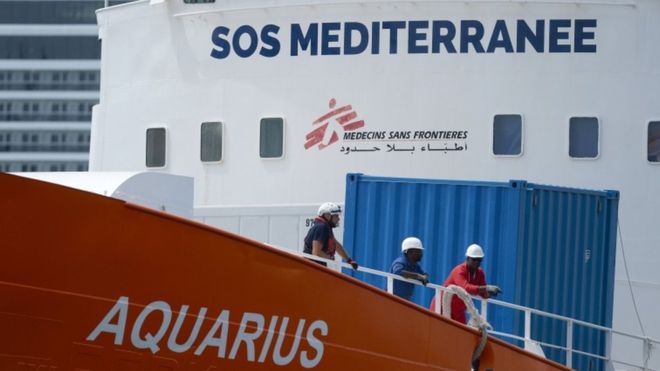 THE AQUARIUS: MIGRANT RESCUE SHIP HAS REGISTRATION REVOKED
Europe - EU
24.09.2018
THE AQUARIUS: MIGRANT RESCUE SHIP HAS REGISTRATION REVOKED
Europe - EU
24.09.2018
- ARMENIA, AZERBAIJAN FMS TO MEET IN NEW YORK The Caucasus and Turkish-Armenian Relations 24.09.2018
- IRAQ BRINGS BACK HUNDREDS IRAQIS DISPLACED IN SYRIA Iraq 24.09.2018
-
 MARTYR DIPLOMATS
The Caucasus and Turkish-Armenian Relations
24.09.2018
MARTYR DIPLOMATS
The Caucasus and Turkish-Armenian Relations
24.09.2018
-
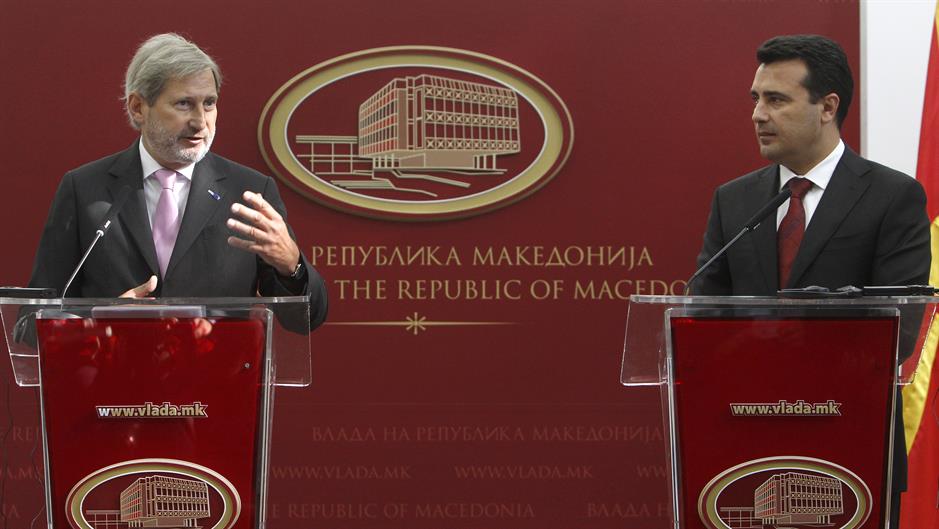 MACEDONIA STARTS SCREENING PROCESS FOR EU ACCESSION NEGOTIATIONS
The Balkans
24.09.2018
MACEDONIA STARTS SCREENING PROCESS FOR EU ACCESSION NEGOTIATIONS
The Balkans
24.09.2018
-
25.01.2016
THE ARMENIAN QUESTION - BASIC KNOWLEDGE AND DOCUMENTATION -
12.06.2024
THE TRUTH WILL OUT -
27.03.2023
RADİKAL ERMENİ UNSURLARCA GERÇEKLEŞTİRİLEN MEZALİMLER VE VANDALİZM -
17.03.2023
PATRIOTISM PERVERTED -
23.02.2023
MEN ARE LIKE THAT -
03.02.2023
BAKÜ-TİFLİS-CEYHAN BORU HATTININ YAŞANAN TARİHİ -
16.12.2022
INTERNATIONAL SCHOLARS ON THE EVENTS OF 1915 -
07.12.2022
FAKE PHOTOS AND THE ARMENIAN PROPAGANDA -
07.12.2022
ERMENİ PROPAGANDASI VE SAHTE RESİMLER -
01.01.2022
A Letter From Japan - Strategically Mum: The Silence of the Armenians -
01.01.2022
Japonya'dan Bir Mektup - Stratejik Suskunluk: Ermenilerin Sessizliği -
03.06.2020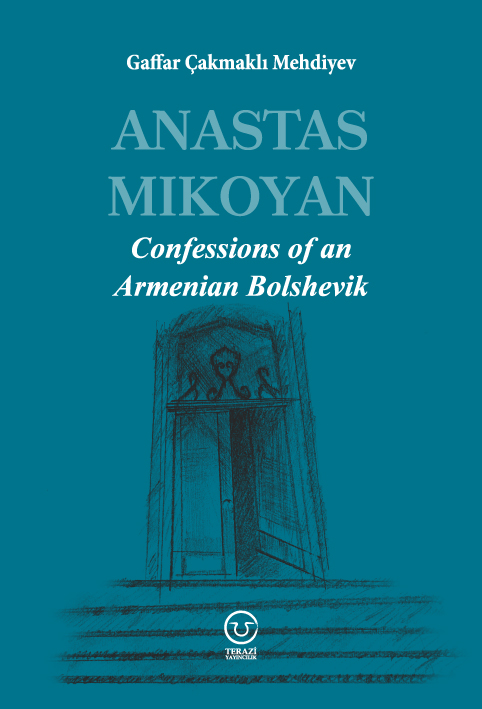
Anastas Mikoyan: Confessions of an Armenian Bolshevik -
08.04.2020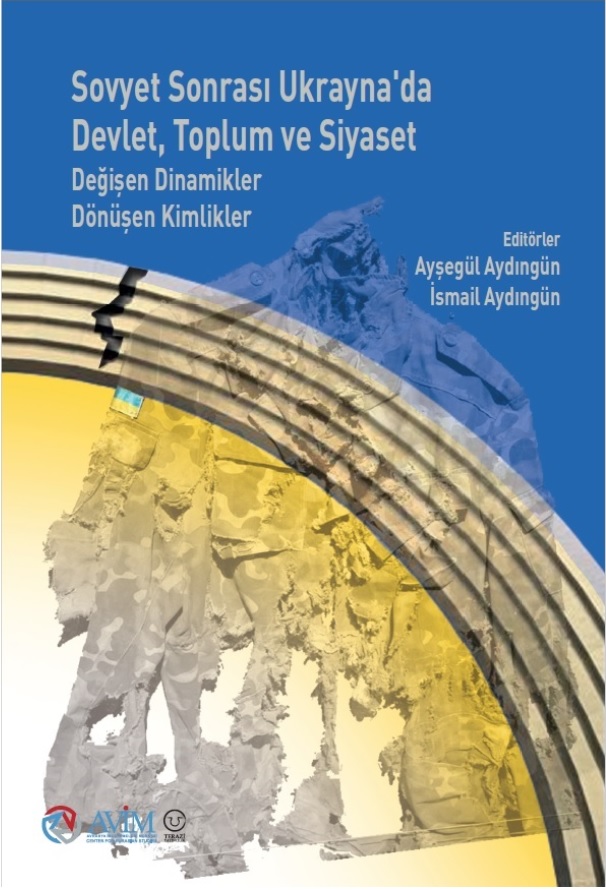
Sovyet Sonrası Ukrayna’da Devlet, Toplum ve Siyaset - Değişen Dinamikler, Dönüşen Kimlikler -
12.06.2018
Ermeni Sorunuyla İlgili İngiliz Belgeleri (1912-1923) - British Documents on Armenian Question (1912-1923) -
02.12.2016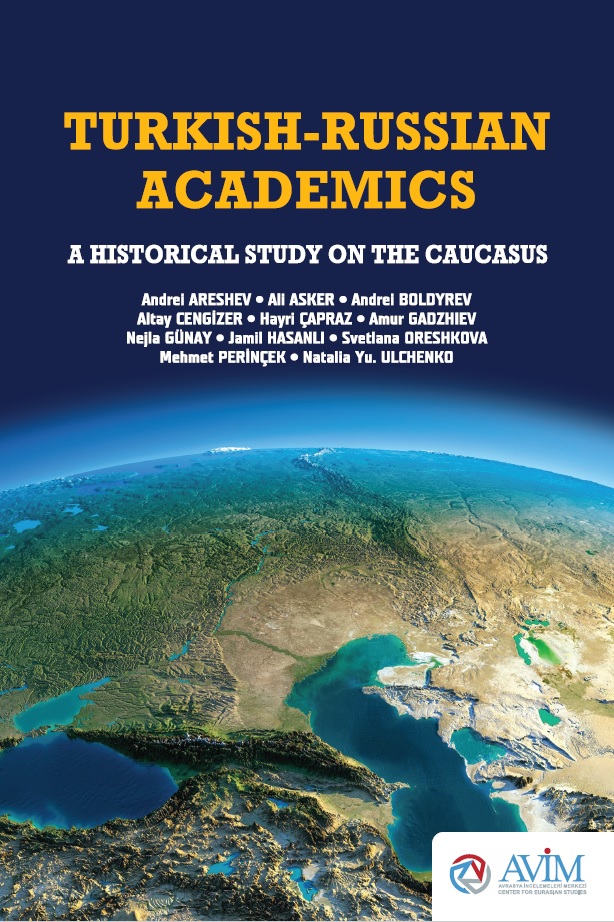
Turkish-Russian Academics: A Historical Study on the Caucasus -
01.07.2016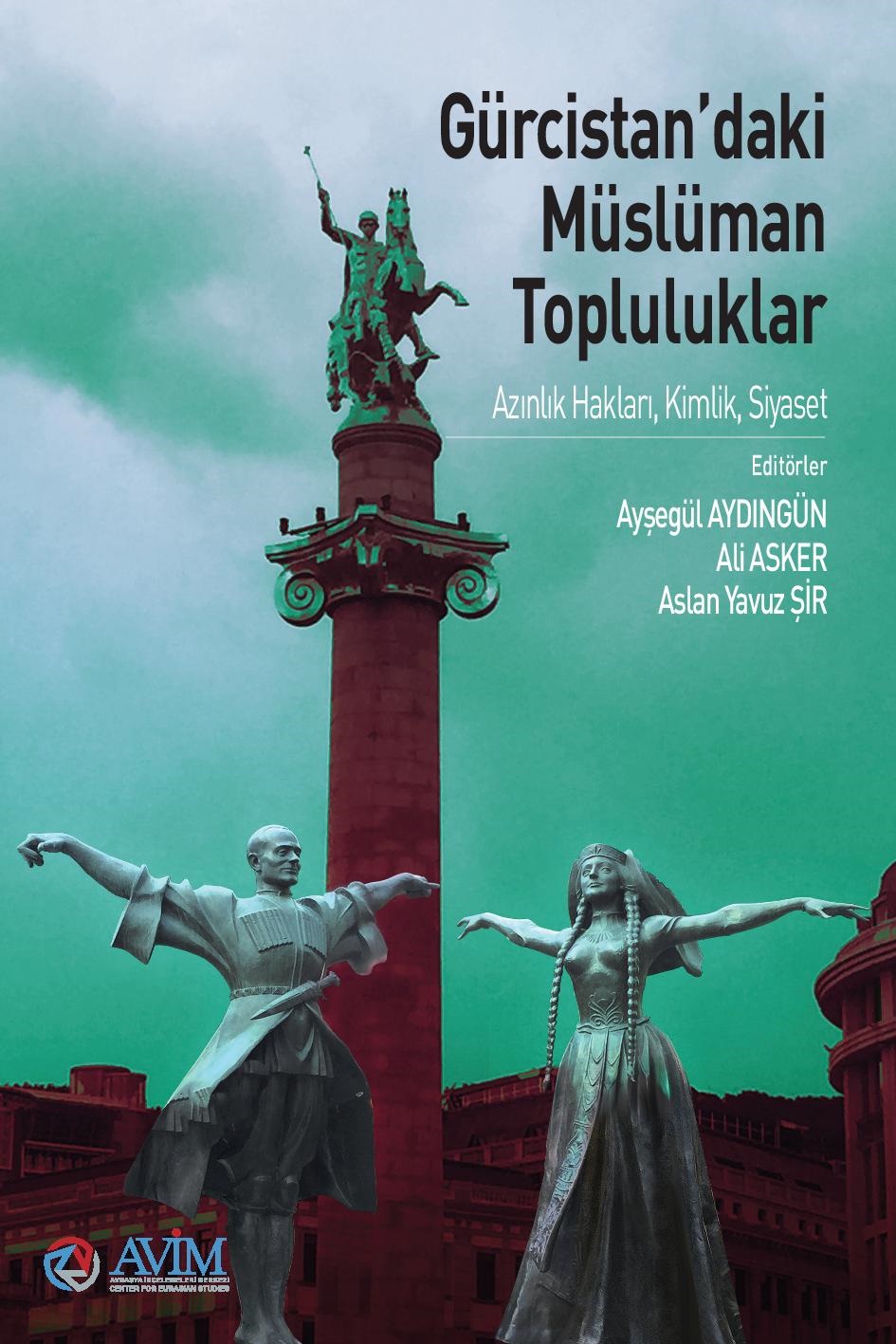
Gürcistan'daki Müslüman Topluluklar: Azınlık Hakları, Kimlik, Siyaset -
10.03.2016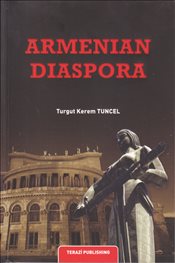
Armenian Diaspora: Diaspora, State and the Imagination of the Republic of Armenia -
24.01.2016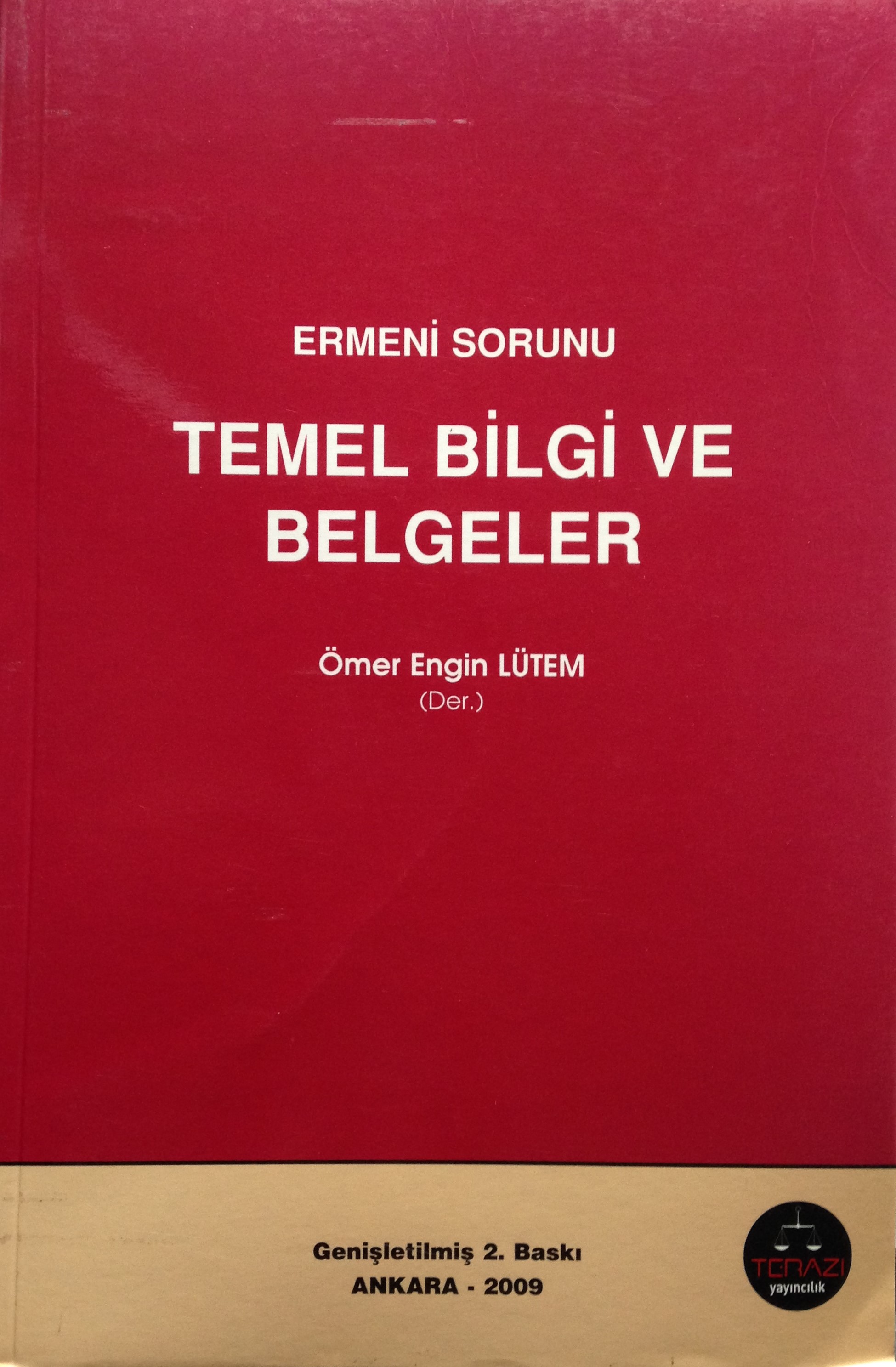
ERMENİ SORUNU - TEMEL BİLGİ VE BELGELER (2. BASKI)
-
AVİM Conference Hall 24.01.2023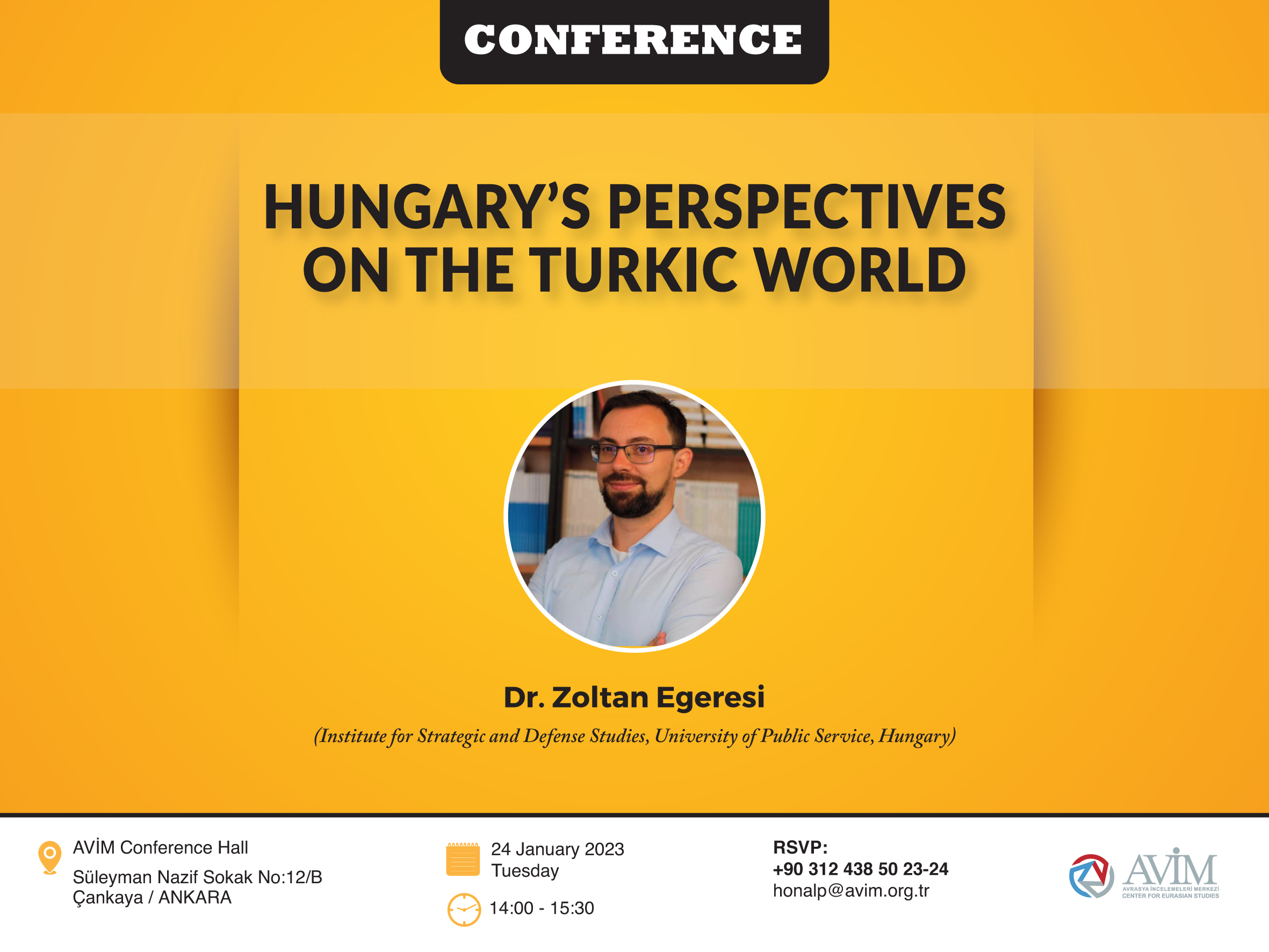
CONFERENCE TITLED “HUNGARY’S PERSPECTIVES ON THE TURKIC WORLD"